

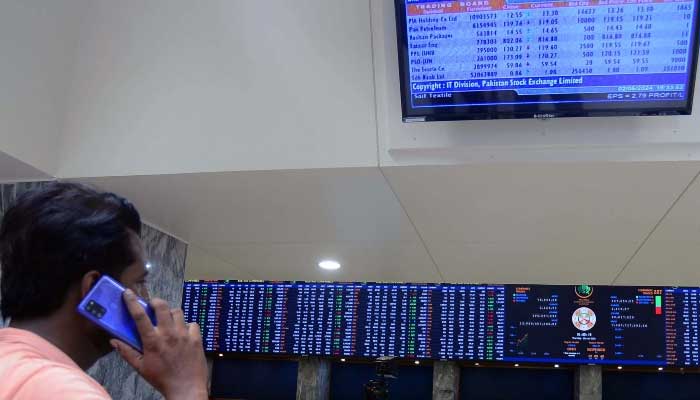
The Pakistan Stock Exchange extended its record-breaking rally on Tuesday, fueled by positive investor sentiment, an improved economic outlook, and aggressive buying by local funds. The benchmark KSE-100 Index surged to an intraday high of 137,727.63, gaining 1225.1 points, or 0.89%, after touching a low of 136,498.16.
This equity market rally is primarily driven by a significant surge in workers’ remittances, robust auto sales, and a notable improvement in foreign exchange reserves. Mohammad Sohail, CEO of Topline Securities, attributed the index reaching a new all-time high of 137,000 to aggressive buying by local funds. He added, “This recent rally is led by banking stocks as investors feel that banks’ dividend payout will remain attractive.” Economist and expert AAH Soomro commented, “There seems to be consolidation post a super sharp rally but fundamentals remain intact for a bull rally. All eyes on earnings season now.”
Pakistan recorded its highest-ever annual workers’ remittances, totaling $38.3 billion for FY25, marking a 27% year-on-year (YoY) increase. June alone saw inflows of $3.4 billion, an 8.0% increase compared to the same month last year. This substantial inflow has significantly strengthened the country’s external financial position, boosting investor confidence.
Furthermore, the State Bank of Pakistan (SBP) reported that its foreign exchange reserves jumped by $1.8 billion week-on-week to reach $14.5 billion for the week ended July 4, which is a 39-month high. Including commercial bank reserves, the country’s total foreign reserves have now surpassed the $20 billion mark for the first time in three years. Analysts anticipate a continuation of positive sentiment this week, supported by these record-breaking remittances, elevated foreign exchange reserves, and improving macroeconomic indicators.
Investor focus will likely remain on corporate earnings reports, the planned Panda bond issuance, and further developments regarding foreign funding and debt management strategies. It is worth noting that just a day earlier, Finance Minister Muhammad Aurangzeb hinted at the possibility of an interest rate cut, stating that there is room for monetary easing, though the final decision rests with the SBP. In its last meeting, the SBP kept the key policy rate steady at 11%, citing inflationary risks and external uncertainties exacerbated by the Iran-Israel conflict. The central bank had previously lowered the interest rate by 100 basis points (bps) to 11% on May 5, having cut the rate by a total of 1,100 basis points since June from an all-time high of 22%.
