

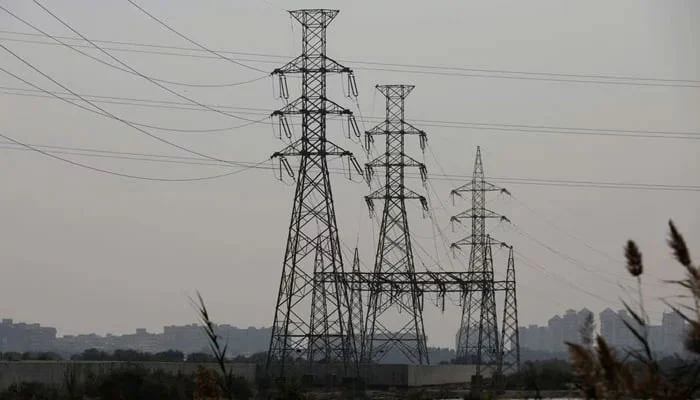
On Friday, Energy Minister Sardar Awais Ahmad Khan Leghari announced that Pakistan has signed term sheets with 18 commercial banks for a Rs1.275 trillion ($4.50 billion) Islamic finance facility. This significant move aims to help the nation address the escalating debt within its crucial power sector. The government, which maintains substantial ownership and control over the power infrastructure, is currently contending with a rapidly expanding “circular debt” – a problematic accumulation of unpaid bills and subsidies that has severely constrained the sector and put a considerable strain on the broader economy.
This pervasive liquidity crunch has led to disruptions in supply, deterred potential investments, and intensified fiscal pressures, making it a central concern under Pakistan’s ongoing $7 billion IMF program. Securing the necessary funds to bridge this financial gap has consistently been a formidable challenge, further complicated by limited fiscal flexibility and the burden of high-cost legacy debt.
Power Minister Awais Leghari conveyed to Reuters that “Eighteen commercial banks will provide these loans through Islamic financing.” He also specified that “It will be repaid in 24 quarterly installments over six years.” This facility is structured in adherence to Islamic principles and is set at a concessional rate of 3-month KIBOR (Karachi Interbank Offered Rate), which is the standard benchmark rate banks use for loan pricing, minus 0.9%. This specific formula has been mutually agreed upon with the IMF. Current 3-month KIBOR rates are roughly between 10.99% and 11.24% as of June 2025.
Leghari emphasized that this new financial arrangement will not contribute to the public debt. He highlighted that existing liabilities in the power sector typically incur higher costs, including late payment surcharges to Independent Power Producers (IPPs), which can reach up to KIBOR plus 4.5%, along with older loans that generally carry rates slightly above the standard benchmark. Among the banks participating in this agreement are Meezan Bank, HBL, National Bank of Pakistan, and UBL.
The government anticipates allocating Rs323 billion annually for the repayment of this loan, with a total repayment cap of Rs1.938 trillion over the six-year period. This agreement also aligns strategically with Pakistan’s broader national objective of eliminating interest-based banking by 2028, a goal gaining momentum as Islamic finance now constitutes approximately a quarter of the country’s total banking assets.
