

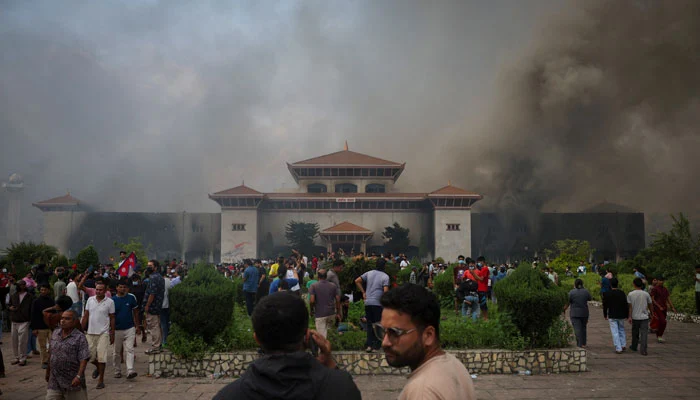
Nepal’s Prime Minister, KP Sharma Oli, resigned on Tuesday, an announcement made just hours after the country reversed a social media ban that had triggered deadly anti-corruption protests. At least 19 people were killed on Monday as security forces used tear gas and rubber bullets to disperse protesters.
Here is a summary of the events.
Why did protests erupt? The catalyst for the demonstrations was the Nepalese government’s decision to block access to several social media platforms that had failed to meet a registration deadline. The government, in announcing the ban last week, said it was a measure to combat the misuse of these platforms, where some users with fake IDs were reportedly spreading hatred and rumors, committing cybercrime, and disrupting social harmony.
How did the situation turn violent? Organizers of the protests, dubbed “Gen Z demonstrations,” stated that young people were also frustrated with what they saw as the government’s failure to address corruption and create economic opportunities. The protests, primarily composed of young people—many in school or college uniforms—started in Kathmandu and quickly spread to other cities. Police were ordered to use water cannons, batons, and rubber bullets to control the crowds.
Officials in the capital reported that some protesters forced their way into the parliament complex, where the army was also deployed, set an ambulance on fire, and threw objects at security personnel. Protesters, however, maintained that they were unarmed and that security forces had fired indiscriminately.
What was the government’s response? The social media ban was lifted overnight, making all apps available to users in Nepal. Oli resigned from his position on Tuesday, citing the “adverse situation” in the country and stating he was stepping down to facilitate a solution and help resolve the issue “politically in accordance with the constitution.”
What is the current situation on the ground? While protesters were still on the streets in some areas, no new reports of violence or clashes emerged after Oli’s resignation, as security forces did not interfere to disperse the crowds. However, flight services remain impacted, with Kathmandu’s airport, the nation’s main gateway, halting operations. The Nepali army has urged restraint and a peaceful resolution through political dialogue.
How have other countries reacted? Nepal’s neighbor, India, expressed hope that all parties would exercise restraint and resolve issues through talks. A joint statement from the embassies of Australia, Finland, France, Japan, South Korea, Britain, Norway, Germany, and the US similarly urged “maximum restraint” and the protection of fundamental rights.
