

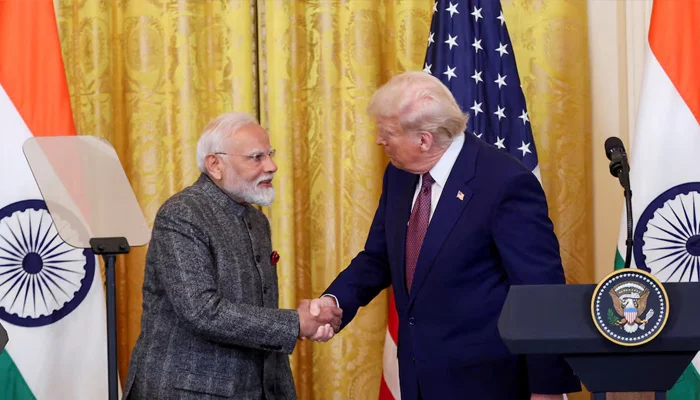
Experts believe that Indian Prime Minister Narendra Modi’s plan to significantly reduce consumption taxes on everyday items could provide billions of dollars in annual relief and boost demand in an economy preparing for potentially damaging US tariffs.
US President Donald Trump has threatened to double import duties on India from 25% to 50% to punish New Delhi for its continued purchase of oil from Russia. He claims that these purchases help fund Moscow’s invasion of Ukraine.
This potential measure has clouded the economic outlook for the world’s fifth-largest economy, with Indian exporters warning of sharp drops in orders and severe job losses. New Delhi has called Washington’s action “unfair, unjustified, and unreasonable” but is already seeking to mitigate the impact. During his annual independence day speech last week, Modi promised to “bring down the tax burden on the common man.” Economists say his proposed cuts to the goods and services tax (GST) would make everything from small cars to air conditioners more affordable for consumers.
Currently, India’s tax system has a complex four-tier structure with rates from 5% to 28%. Under Modi’s reforms, most goods would fall into just two tiers, taxed at either 5% or 18%. The Indian leader has referred to this change as a “Diwali gift,” a reference to the Hindu festival of lights when consumers typically spend on gold, clothing, and electronics.
‘Significant Savings’
The final impact of Trump’s tariffs on ordinary Indians will depend on progress toward a Russia-Ukraine peace deal and whether New Delhi can find alternative oil suppliers before the US president’s August 27 deadline. However, experts say Modi’s tax reform could help strengthen domestic demand by reducing tax collections by an estimated $13 billion to $17 billion.
Analysts at Emkay Global Financial Services called the policy a “welcome reform towards boosting domestic consumption.” They estimate that most items currently taxed at the highest 28% rate would drop to 18%, while “nearly all” items in the 12% tier would move to the 5% bracket. Analysts at Motilal Oswal, an Indian financial services firm, said the changes would benefit a wide range of sectors and result in “sizeable savings” for households.
The proposal’s fate ultimately rests with the GST Council, which includes representatives from state governments and has struggled to reach a broad consensus in the past. Experts say that if approved, the cuts would strain public finances. Still, they could also help offset the risks posed by the tariffs and boost Modi’s standing with the middle class. The proposal comes ahead of expected elections later this year in Bihar, a large Hindu-majority state with 130 million people that is a key political battleground for Modi.
Deepanshu Mohan, an economist at OP Jindal Global University, told AFP that “the popular economic narrative right now is that of Trump’s 50% tariffs and how the US-India relationship is seeing setbacks.” Mohan added that “the GST readjustment is a strong response from Modi in that context. It’s Modi telling the middle class: ‘We are trying to make sure you have enough at your end.'” However, he also noted that the move was an acknowledgment that India’s economy had not been working for its “low middle-income class for some time.”
US-India Trade Talks
Although economists have been calling for an overhaul of the GST system for years, Modi’s surprise announcement comes as US-India ties are at a multi-decade low. Economists estimate that if the two countries fail to sign a trade deal, Trump’s tariffs could drag India’s GDP growth below 6% for the current fiscal year, lower than the central bank’s projections of 6.5%.
According to trade intelligence firm Kpler, New Delhi’s stance on Russian oil imports will become clearer by late September, as most of this month’s cargoes were contracted before Trump’s threats. Kpler analyst Sumit Ritolia told AFP that while Indian refiners are showing “growing interest” in crude from the US, West Africa, and Latin America, this is more indicative of “greater flexibility, not a deliberate pivot.” He stated, “Until there’s a clear policy shift or sustained change in trade economics, Russian flows remain a core part of India’s crude basket.”
As the clock ticks down on the tariff hike, the state of US-India trade negotiations remains uncertain. New Delhi says it is committed to reaching a deal, but Indian media reports suggest that US negotiators have postponed a planned late-August visit to the Indian capital.
