

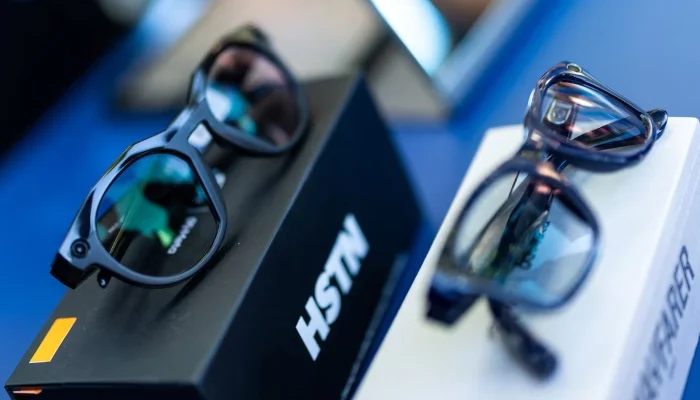
On Wednesday, Meta Platforms introduced its inaugural consumer-ready smart glasses featuring a built-in display, a move designed to build on the success of its popular Ray-Ban line, which has become an early consumer favorite in the age of artificial intelligence.
During Meta’s Connect event, CEO Mark Zuckerberg showcased the Meta Ray-Ban Display and a new wristband controller. He was met with applause, despite encountering some minor technical issues during the demonstration.
Having achieved success with its smart glasses, Zuckerberg presented them as the ideal medium for humans to access the “superintelligence” promised by AI.
“Glasses are the perfect form factor for personal superintelligence because they let you stay present in the moment while getting access to all of these AI capabilities that make you smarter, help you communicate better, improve your memory, improve your senses, and more,” Zuckerberg explained.
The new Display glasses are equipped with a small digital screen in the right lens for basic functions like notifications. They will be available in stores starting September 30 with a starting price of $799. This price includes a wristband that interprets hand gestures into commands, such as responding to texts and calls.
The launch, held at Meta’s annual Connect conference for developers at its Menlo Park, California headquarters, marks the company’s latest effort to gain ground in the highly competitive AI race.
Although the social media giant has been a pioneer in developing smart glasses, it currently trails rivals like OpenAI and Alphabet’s Google in the development and release of advanced AI models.
Zuckerberg has initiated a talent war in Silicon Valley to recruit engineers from competitors and has committed to investing tens of billions of dollars in advanced AI chips.
The introduction of the new glasses comes at a time when Meta is under scrutiny for its handling of child safety on its platforms.
Reuters reported in August that Meta’s chatbots had engaged children in inappropriate conversations about sex and race, while whistleblowers alleged this month that researchers were discouraged from studying the harmful effects of virtual reality on children.
Oakley Glasses for Athletes
On the same day, Meta also launched a new pair of Oakley-branded glasses called Vanguard, targeting athletes, with a price tag of $499.
This device integrates with fitness platforms such as Garmin and Strava to provide real-time training data and post-workout summaries, offering a battery life of nine hours. It is scheduled to be available starting October 21.
Furthermore, the company has updated its earlier Ray-Ban line. While this model lacks a built-in display, it now boasts nearly double the battery life and an improved camera compared to the previous generation. The updated price is $379, an increase from the earlier price of $299.
While analysts don’t foresee robust sales for the Display glasses, they see them as a stepping stone towards the anticipated 2027 launch of Meta’s “Orion” glasses. Last year, Meta revealed a prototype of the Orion, which Zuckerberg described as “the time machine to the future.”
Forrester analyst Mike Proulx drew a parallel between the debut of the Display glasses and Apple’s introduction of the watch as an alternative to the smartphone.
He commented, “Glasses are an everyday, non-cumbersome form factor.” Proulx added that Meta still needs to convince consumers that the benefits justify the cost, but “there’s a lot of runway to earn market share.”
All the devices include existing features such as Meta’s AI assistant, cameras, hands-free control, and the ability to livestream to the company’s social media platforms, including Facebook and Instagram.
Zuckerberg’s demonstrations of the new Display glasses did not go flawlessly, with a call to the glasses failing to connect.
“I don’t know what to tell you guys,” Zuckerberg said. “I keep on messing this up.” The crowd responded with supportive cheers.
“It’s great value for the tech you’re getting,” said Jitesh Ubrani, research manager for IDC’s Worldwide Mobile Device Trackers, commenting on the Display glasses.
However, he noted that the software needs to improve.
“Until we get there, it’s not really a device that the average consumer might know about or care to purchase,” Ubrani stated.
IDC projects that global shipments of augmented reality/virtual reality headsets and smart glasses without displays will increase by 39.2% in 2025 to 14.3 million units. Meta is expected to be a key driver of this growth, fueled by the demand for its more affordable Ray-Bans, which it co-produces with Ray-Ban owner EssilorLuxottica.
