

“Maybe Pakistan Will One Day Sell Oil to India” — A Trump Remark and the Shifting Geometry of Global Energy
By Raja Zahid Akhtar Khanzada
When Donald Trump made the remark last year, the world did not take it seriously. Social media laughed, analysts dismissed it as another careless statement, and even in Pakistan the words were received with surprise and unease. At the time, the picture was genuinely blurred, and few realized that this was not a comment about oil reserves alone, but an allusion to routes, power, and future roles in a changing global order.
Trump had said:
“We have just concluded a deal with the country of Pakistan, whereby Pakistan and the United States will work together on developing their massive oil reserves. We are in the process of choosing the oil company that will lead this partnership. Who knows, maybe they’ll be selling oil to India some day.”
Those words were initially treated as little more than political rhetoric. Yet as time has passed, a more consequential question has emerged: what model was Trump pointing toward? Because the reality is that neither Pakistan nor India possesses large proven oil reserves. And yet India today stands among the world’s major economies. Without understanding this contradiction, Trump’s statement cannot be fully understood.
India did not build its economic momentum because it discovered vast underground riches. It did so by turning oil into a system. It purchased crude, particularly discounted supplies from Russia, refined it, powered its industries with cheaper energy, and then exported refined petroleum products to global markets. In this way, oil became not merely a source of energy for India, but a driver of economic velocity.
There is often a suggestion that Russia supplied India with Venezuelan oil. The facts do not support this claim. Russia itself is one of the world’s largest oil producers, and the crude it sold to India was overwhelmingly its own production. Russia’s engagement with Venezuela was largely shaped by sanctions, debt arrangements, and political logistics. The real contest was never about volume alone, but about control and corridors.
Today, as Trump speaks once again about bringing Venezuelan oil back into global markets under American control, this is no longer simply a story about Venezuela. It is an announcement that the energy chessboard is being reset. Oil remains power, but that power now lies less in production than in supply chains and political decision making.
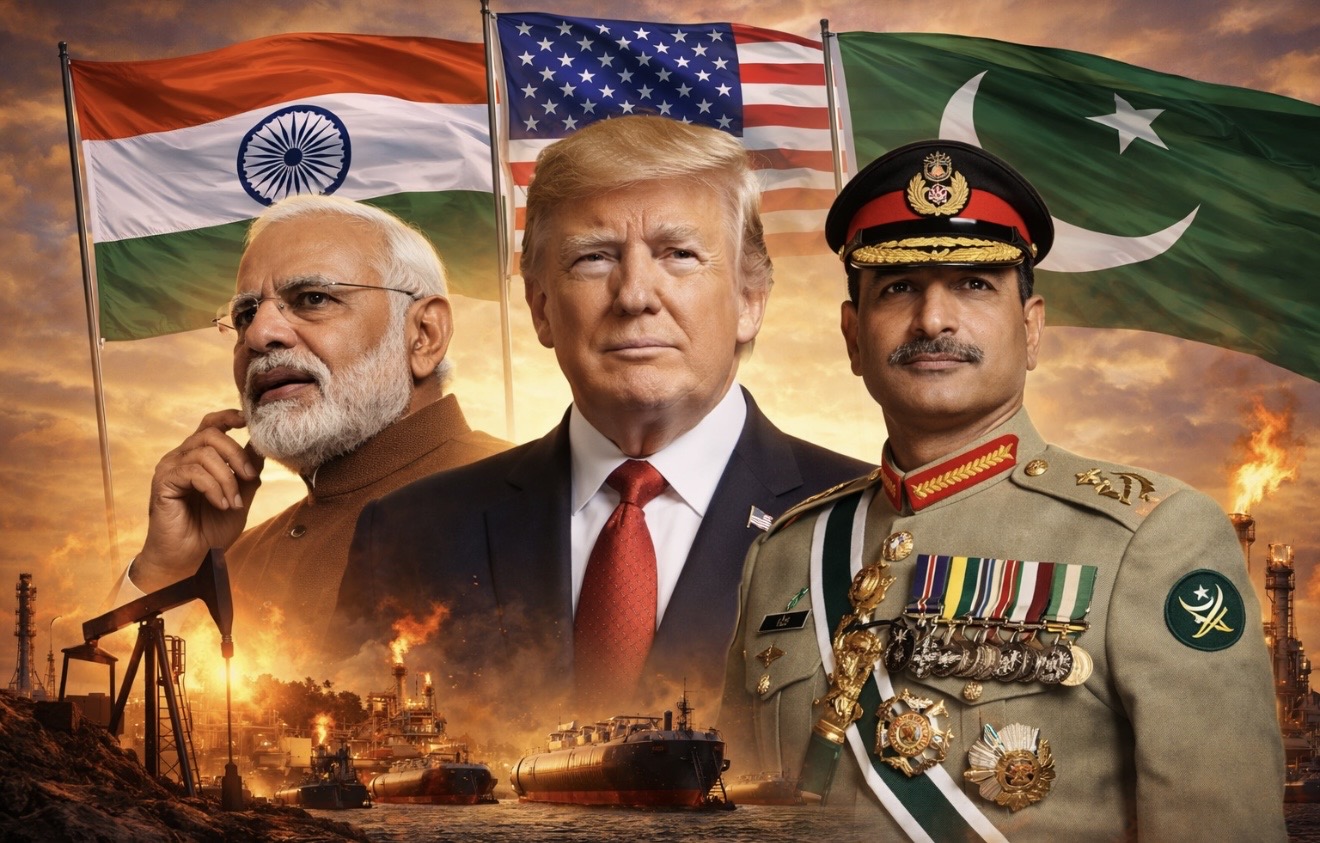
This raises an inevitable question: where does Pakistan stand in this emerging map? It is true that Pakistan is not a major oil producing country. Its domestic output is limited, and it lacks globally dominant energy corporations. Yet it is also true that Pakistan possesses basic refining infrastructure, the capacity to import crude, and above all a geographic significance that has repeatedly drawn the attention of global powers throughout history.
It is at this point that Trump’s old remark begins to resonate differently. He may not have been suggesting that Pakistan would become the next Saudi Arabia. Rather, he may have been gesturing toward a model, the same model that benefited India. Not reserves, but role. Not geology, but positioning. Routes, partnerships, and political arrangements. This becomes especially relevant at a moment when relations between Trump and Prime Minister Narendra Modi appear strained, tariff threats are being raised, and India is being reminded that no position in global politics is permanent.
In the world of energy, alliances are not enduring; interests are. Today India is a buyer. Tomorrow it may face pressure. Today Pakistan appears weak. Tomorrow it may be offered an opening. This is the harsh but enduring logic of geopolitics.
To claim that Pakistan will soon sell oil to India would be unrealistic. But to dismiss Trump’s remark as a mere joke now seems increasingly difficult. Some statements are made ahead of their time, and time itself becomes their interpreter.
Back then, people laughed. Today, they reflect. And perhaps in the days ahead, those same observers will watch the map quietly change. History, after all, is rarely written in noise. More often, it is written in silence.
