

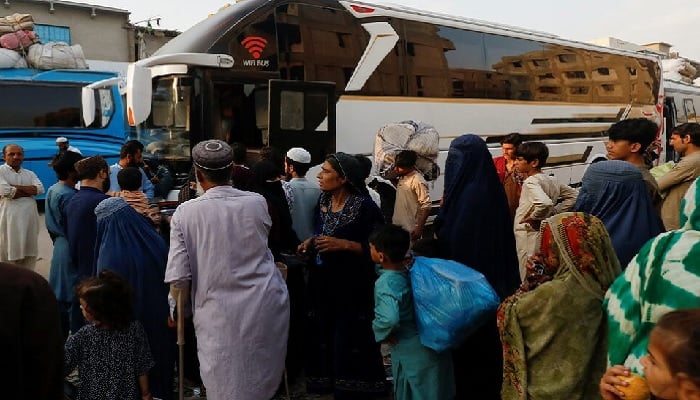
Over 200,000 Afghans have departed from Pakistan since the government intensified its deportation campaign in April, while Iran has also significantly increased its expulsions of Afghans. For decades, generations of Afghans sought refuge and improved economic prospects in neighboring Pakistan and Iran, fleeing successive wars. Both governments have now grown weary of hosting large migrant populations and have ordered millions to leave under the threat of arrest.
Pakistan has initiated a stringent campaign to deport over 800,000 Afghans whose residency permits have been revoked, including some who were born or had resided in the country for many decades. According to the interior ministry, more than 135,000 Afghans left Pakistan in April, approximately 67,000 departed in May, and over 3,000 were sent back in the first two days of June.
The UN’s International Organization for Migration (IOM) expressed concern on Tuesday regarding a notable increase in Afghan families being deported from Iran, documenting 15,675 crossings in May, which is more than double the figure from the preceding month. Iranian officials have mandated that undocumented Afghans must leave by July 6. Nader Yarahmadi of the Iranian interior ministry stated on state television that this measure would impact around four million of the over six million Afghans Iran claims are present in the country.
The IOM cautioned that the substantial influx across both borders risks overwhelming Afghanistan’s already “fragile reception and reintegration systems.” The organization reiterated its appeal for “all countries to immediately suspend the forced return of Afghans, regardless of their immigration status, until safe, voluntary, and dignified return conditions are established.”
Escalation in Border Region Violence
Millions of Afghans have entered Pakistan over the past several decades, escaping ongoing conflicts, with hundreds of thousands more arriving after the Taliban government’s return in 2021. A deportation initiative commenced in 2023, leading to hundreds of thousands crossing the border within weeks, driven by fears of harassment or apprehension. In total, more than one million Afghans have now left Pakistan.
Islamabad has labeled Afghans as “terrorists and criminals,” but analysts suggest that these expulsions are intended to pressure the neighboring Afghan Taliban authorities to curb militancy in border regions. Last year, Pakistan recorded the highest number of fatalities from attacks in a decade. The government frequently accuses Afghan nationals of involvement in attacks and blames Kabul for providing sanctuary to militants, a charge denied by Taliban leaders.
As security and economic challenges deepen, some Pakistanis have expressed weariness with hosting a large Afghan population, and the deportation campaign enjoys widespread public support. Pakistan has issued a warning that it will revoke the protection granted to the 1.3 million Afghans holding refugee cards issued by the UN High Commissioner for Refugees by the end of June.
