

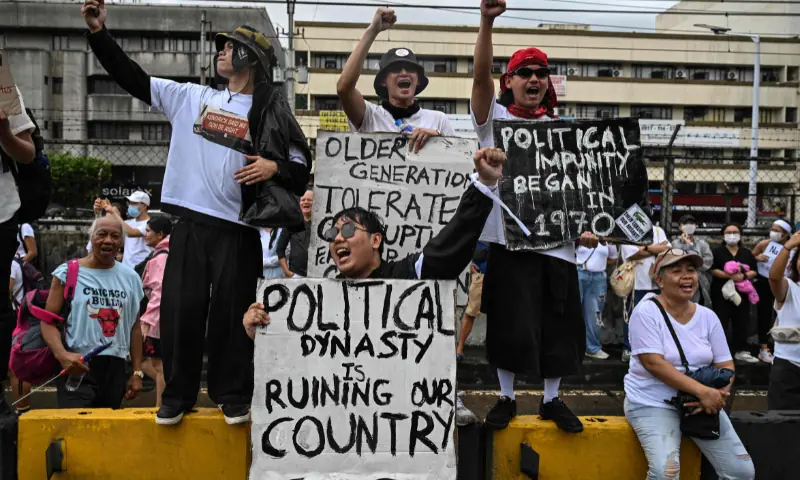
Thousands of Filipinos gathered in Manila on Sunday to protest a major corruption scandal involving “bogus” flood-control projects that are believed to have cost taxpayers billions of dollars. The scandal has already led to the implication of several lawmakers and the resignation of congressional leaders.
However, the peaceful demonstration was overshadowed by violent clashes between a group of protesters and police. Authorities used water cannons and sirens to disperse the crowds, while some individuals set police vehicles on fire and shattered the windows of a police headquarters.
Arrests and Injuries
At least 216 people were initially taken into custody, with 88 minors among them. The youngest person arrested was a 12-year-old boy, according to Manila City Mayor Isko Morena.
Police spokesperson Major Hazel Asilo said it was unclear if the individuals who engaged in violence were part of the main protest group or were “just causing trouble.” She noted that none of the arrested individuals had given a reason for their actions or indicated if they had been paid. Another police spokesperson, Major Philipp Ines, reported that 93 officers were injured during the clashes. The Department of Health confirmed that around 50 people were taken to a single Manila hospital.
Background of the Scandal
Anger over these “ghost” infrastructure projects has been growing since President Ferdinand Marcos highlighted them in a July state of the nation address. This came after weeks of deadly flooding that devastated the country. The Department of Finance estimates that the Philippine economy lost up to 118.5 billion pesos ($2 billion) between 2023 and 2025 due to corruption in these projects, while Greenpeace suggests the total loss could be as high as $18 billion.
The Philippines is frequently hit by an average of 20 storms and typhoons annually, which often results in severe flooding and leaves millions in disaster-prone areas in a state of constant poverty. The country was expecting more heavy flooding on Monday as Super Typhoon Ragasa approached its northern provinces.
