

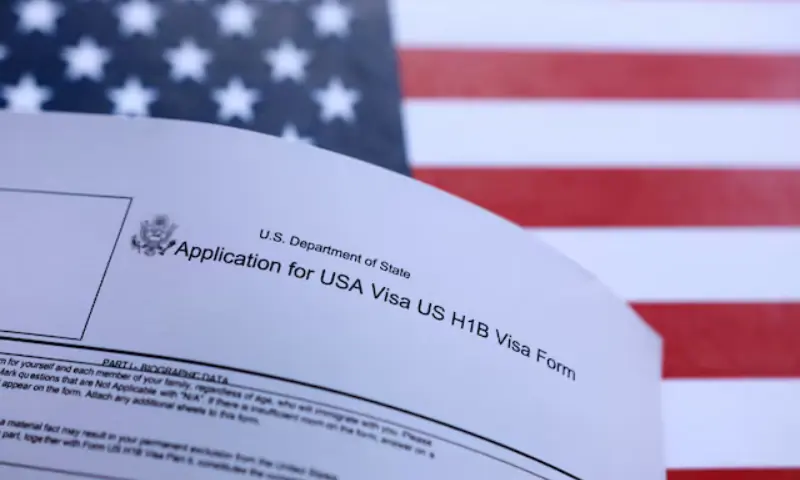
SAN FRANCISCO, US—A broad coalition of labour unions, employers, and religious groups filed a lawsuit on Friday seeking to block US President Donald Trump’s unprecedented attempt to impose a $100,000 fee on new H-1B visas for highly-skilled foreign workers.
The lawsuit, filed in federal court in San Francisco, marks the first legal challenge to a proclamation Trump issued two weeks ago as the Republican administration moves to drastically tighten restrictions on high-skilled immigration.
Plaintiffs, including the United Auto Workers union, the American Association of University Professors, a nurse recruitment agency, and several religious organizations, argue that the President’s power to restrict the entry of foreign nationals does not extend to overriding the comprehensive statute passed by Congress that governs the H-1B visa program.
White House spokeswoman Abigail Jackson defended the order, stating the administration engaged in lawful actions “discouraging companies from spamming the system and driving down American wages, while providing certainty to employers who need to bring the best talent from overseas.”
Visa Program at the Centre of Economic Debate
The H-1B program is a critical mechanism allowing US employers, particularly those in the technology sector, to hire foreign workers in specialty fields. Critics argue that the visas are often abused to replace American workers with cheaper foreign labour. Conversely, major companies contend the program is essential for addressing a persistent shortage of qualified American workers. Employers currently sponsoring H-1B workers typically pay fees ranging from $2,000 to $5,000.
Trump’s executive order essentially bars new H-1B recipients from entering the US unless their sponsoring employer pays the additional $100,000. The administration justified the move by invoking federal immigration law, arguing that the high number of lower-wage H-1B workers undercuts the program’s integrity and threatens national security by discouraging Americans from pursuing science and technology careers.
Legal Challenge: ‘Pay to Play’ Accusation
The core of the plaintiffs’ legal argument rests on the assertion that the President lacks the authority to unilaterally alter a statutory visa scheme or impose fees to generate revenue—a power reserved exclusively for Congress under the US Constitution.
“The Proclamation transforms the H-1B programme into one where employers must either ‘pay to play’ or seek a ‘national interest’ exemption, which will be doled out at the discretion of the Secretary of Homeland Security,” the lawsuit states. It claims such a system “opens the door to selective enforcement and corruption.”
The groups further argue that agencies implementing the order—including US Citizenship and Immigration Services and the US State Department—adopted new policies without following necessary rulemaking processes and failed to consider how “extorting exorbitant fees will stifle innovation.”
The H-1B program provides 65,000 visas annually for general temporary foreign workers in specialized fields, plus an additional 20,000 for workers holding advanced US degrees. Government data shows that India was by far the largest beneficiary last year, accounting for 71 per cent of approved visas, with China a distant second at 11.7 per cent.
