

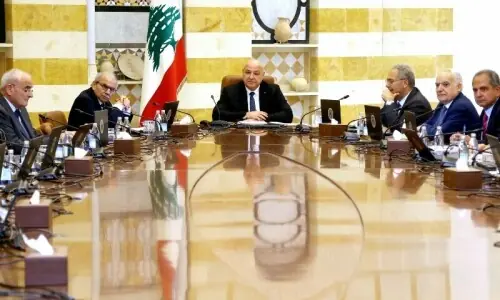
Lebanon’s government has welcomed and approved an army-led plan for the disarmament of Hezbollah, but the move faces significant hurdles both internally and externally. The decision came during a three-hour cabinet session, which was boycotted by five Shiite ministers, including those from Hezbollah and its ally the Amal Movement.
Information Minister Paul Morcos stated that the government welcomed the plan but did not formally pass it with a set timeline, noting that the army would begin implementation according to its “limited” logistical, material, and personnel capabilities, which may require “additional time [and] additional effort.” While the details of the plan are being kept confidential, it is reported to be a five-stage process to ensure the state has a monopoly on weapons. The first phase, focusing on the area south of the Litani River near the Israeli border, is expected to take three months.
The disarmament push has gained traction due to pressure from the U.S. and Saudi Arabia, as well as from Lebanon’s domestic opponents of the Iran-backed group. However, Hezbollah has vehemently rejected the plan, with a senior official stating that the group will “not abandon its weapons under any circumstances or pretext at all.” Hezbollah insists that disarmament is an “internal Lebanese matter” and that it would be a “serious misstep” to even discuss it while Israel continues its military operations and occupation of Lebanese territory.
External and Internal Hurdles
The Lebanese government has conditioned any progress on the disarmament plan on Israel’s commitment to a U.S. roadmap, which calls for an Israeli withdrawal from Lebanon and a halt to military operations in exchange for Hezbollah’s disarmament. However, Lebanon’s foreign minister has stated that Israel has not yet shown any commitment to this plan, and Israeli airstrikes continue to kill people in Lebanon.
Furthermore, the Lebanese army faces significant logistical and personnel limitations in carrying out the plan. A source close to the military stated that the army’s commander believes a fixed timeline is unfeasible given the lack of internal consensus and the ongoing threats from Israel. Hezbollah’s political and military power remains substantial, and there are fears that forcing disarmament could lead to internal conflict. The walkout by the Shiite ministers highlights the deep sectarian divide over the issue.
