

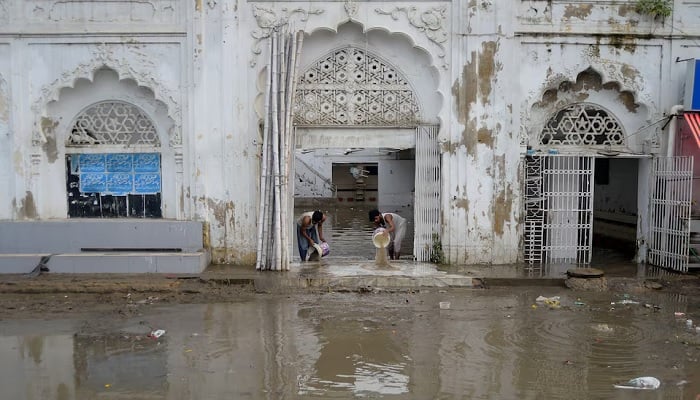
The Pakistan Meteorological Department (PMD) announced on Friday that the rain system that has been impacting Karachi for the past three days is expected to move out today, with only light morning showers anticipated. However, a new spell of rain is likely to hit other parts of Sindh later this month, according to a Met Office spokesperson.
“A fresh monsoon system will enter Sindh on August 27, bringing rain to Karachi and other parts of the province until August 30,” the spokesperson said, adding that the current system should dissipate today.
Rains began in Karachi on Tuesday, leading to widespread flooding. The rainfall in some parts of the city—Pakistan’s largest and financial hub, home to over 20 million people—reached levels not seen in years. This severe downpour resulted in 17 deaths, primarily from drowning, road accidents, building collapses, and electrocution.
Officials reported that the rain also disrupted power, mobile phone services, and flights. Television footage showed cars and other vehicles floating down flooded streets, and houses submerged in water.
In Karachi, several major roads, including Jahangir Road, developed potholes within hours. Water accumulation on the road from Teen Hatti to Gurumandir slowed traffic to a crawl. The Korangi causeways were closed after the rising water levels in the Malir River made crossing unsafe. Underpasses at Sohrab Goth and Drigh Road remained submerged, while rainwater on Airport Road and the route from Safora to Pehlwan Goth badly affected traffic flow. This situation forced several private schools to announce closures for the day, with some shifting classes online. The Sindh government, however, did not issue any directive for a blanket closure of schools.
Electricity Supply Challenges
The sudden downpour disrupted the city’s electricity system, and restoration efforts were hampered by waterlogging and traffic congestion, which made access difficult. The prolonged power cuts further compounded the misery of the affected citizens.
Residents of Gulistan-e-Jauhar Block 9 staged protests against K-Electric over outages stretching past 56 hours, stating they had been left without both electricity and water. “Children, women, and the elderly are suffering,” said one protester outside the utility’s office, where people had gathered to express their anger. Power suspensions were also reported in City Villas, Muslim Housing Society (Scheme 38), Saddar, and Jubilee Market, where residents said supply had been cut since Tuesday evening.
In a statement, K-Electric said that electricity was being supplied to 2,000 of its 2,100 feeders across the city. The spokesperson added that approximately 100 feeders remained shut, with restoration work underway. However, outages lasting 24 hours or longer were reported in multiple blocks of Gulistan-e-Jauhar, as well as in the Architectural Society and Karachi Revenue Judicial Society.
For many residents, the combination of waterlogged streets and extended blackouts has become a grim reminder of how vulnerable Karachi remains to even a modest spell of rain. According to authorities, nearly 750 people have died since the monsoon season began this year. Pakistan is among the world’s most vulnerable countries to the effects of climate change and is increasingly facing extreme weather events. In 2022, monsoon floods submerged one-third of Pakistan, resulting in approximately 1,700 deaths.
