

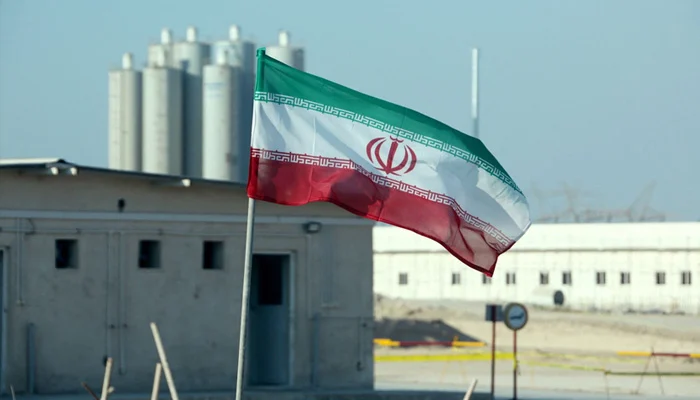
Tehran has recalled its ambassadors in Britain, France, and Germany for consultations, following the three European nations’ decision to trigger the mechanism for the “snapback” of United Nations sanctions, Iranian state television reported Saturday, according to AFP.
The move comes as Iran was set to face sweeping UN sanctions late Saturday—the first time in a decade—after nuclear talks with Western powers failed to find an unexpected last-minute resolution.
The UN nuclear watchdog confirmed on Friday that inspectors had been granted return access to Iranian sites, but Western powers determined that progress was insufficient to justify a delay after a week of high-stakes diplomacy at the UN General Assembly.
The sanctions are scheduled to go into effect at 0000 GMT on Sunday (8:00pm Saturday in New York). The measures will establish a global ban on engagement with companies, individuals, and organisations accused of involvement in developing Iran’s nuclear program or ballistic missiles.
Iranian President Masoud Pezeshkian rejected the notion of striking a deal, arguing that Israel and the United States were attempting to leverage pressure to topple the Islamic republic. “If the goal had been to resolve concerns on the nuclear program, we could easily do that,” Pezeshkian told reporters, reiterating that Iran would never pursue nuclear weapons.
Pezeshkian, who met with French President Emmanuel Macron during the week, revealed that France had proposed Iran surrender its stockpile of highly enriched uranium in exchange for a one-month delay in the return of sanctions. He dismissed the offer: “Why would we put ourselves in such a trap and have a noose around our neck each month?” He accused the United States of pressing the Europeans not to reach any compromise.
Steve Witkoff, a friend of President Trump and a roving negotiator, had previously stated that the U.S. did not intend to hurt Iran and remained open to further talks. However, Pezeshkian charged that Witkoff lacked seriousness, claiming he had backtracked on agreements during earlier talks that abruptly ceased when Israel launched its military campaign.
Russia Vows Non-Enforcement
While the sanctions are designed to inflict new economic pain on Iran, their global enforcement remains uncertain. Russian deputy ambassador Dmitry Polyansky stated Friday that Moscow, a key Iranian partner, considered the reimposition of sanctions “null and void.” Russia and China attempted at the Security Council on Friday to postpone the sanctions until April but failed to garner sufficient votes.
The U.S. already enforces unilateral sanctions and has tried to force all nations to halt the purchase of Iranian oil, though Chinese companies have defied this pressure. The new UN sanctions are a “snapback” of the measures suspended under the 2015 nuclear agreement negotiated under former President Barack Obama, which had offered sanctions relief for drastic curbs on Iran’s nuclear program.
The International Crisis Group noted that Iran seemed largely dismissive of the snapback, having already adapted to U.S. sanctions. However, the group warned that reversing the snapback would be difficult, requiring consensus at the Security Council, and is “likely to compound the malaise around an economy already struggling with high inflation, currency woes and deepening infrastructure problems.”
Israeli Prime Minister Benjamin Netanyahu, in a defiant UN address on Friday, urged against any delay in the snapback and hinted that Israel was prepared to strike Iran’s nuclear program again, following the 12 days of bombing in June that Iranian authorities claim resulted in over 1,000 deaths.
Pezeshkian affirmed that Iran would not retaliate against the sanctions by withdrawing from the nuclear Non-Proliferation Treaty, cautioning that unnamed powers were seeking a “superficial pretext to set the region ablaze.”
