

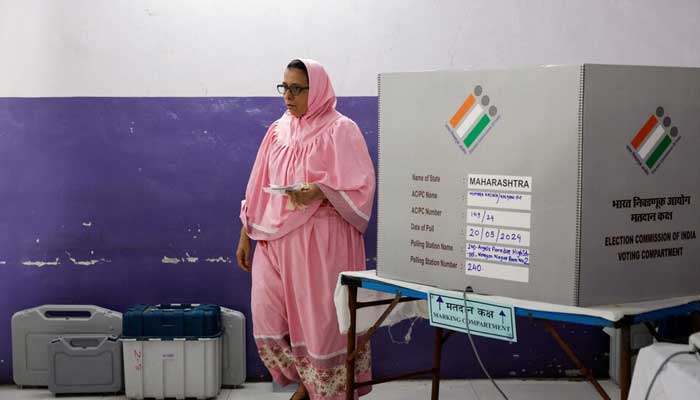
Indian election officials have granted voters in Bihar state a mere few weeks to establish their citizenship, demanding documents that few possess, in a voter registration overhaul slated for nationwide implementation. This development has ignited widespread fears of disenfranchisement. The Election Commission of India (ECI) announced the revision of voter rolls in June, ahead of upcoming polls in the eastern state.
The ECI stated that this exercise would subsequently be replicated across the entire nation of 1.4 billion people. According to the ECI, the “intensive revision” was deemed necessary, partly to prevent the “inclusion of the names of foreign illegal immigrants.” Members of Prime Minister Narendra Modi’s Hindu nationalist Bharatiya Janata Party (BJP) have long asserted that significant numbers of undocumented Muslim migrants from neighboring Bangladesh have fraudulently entered India’s electoral rolls. Critics, however, contend that this overhaul could render vast numbers of Indian citizens unable to cast their votes.
“You are being asked to produce documents that very few people have,” commented Asaduddin Owaisi, a prominent Muslim lawmaker. “It will lead to mass disenfranchisement.” Opposition lawmakers warn that this initiative will disproportionately affect minorities, including Muslims and Dalit communities, who occupy the lowest rung of India’s rigid caste hierarchy.
‘Engineered Exclusions’
All prospective voters in Bihar must furnish proof of citizenship by July 25. Those registered in 2003, the last instance of voter list scrutiny in Bihar, are permitted to submit a copy of that registration. The remaining approximately 30 million people, according to ECI estimates, are required to provide evidence of their place and date of birth. Furthermore, individuals born after 1987 must also supply proof of their parents’ Indian citizenship. This stringent requirement impacts over a third of potential voters in Bihar, which is India’s third most populous and its poorest state.
Bihar also represents a critical election battleground, as it is the only state within India’s northern Hindi-speaking belt where Modi’s BJP has exclusively governed in a coalition. Bihar’s principal opposition party, the Rashtriya Janata Dal, alongside other parties and activists, has challenged the election commission in the Supreme Court. The court petition argues, “It is being used to justify aggressive and opaque revisions of electoral rolls that disproportionately target Muslim, Dalit and poor (Indian) migrant communities.” It further asserts, “They are not random patterns but… engineered exclusions.”
Unlike many other nations, India does not have a single, unique national identity card. The widely adopted biometric-linked “Aadhaar” identity card is notably not among the documents listed by the ECI as acceptable proof. Permitted documents include birth certificates, passports, and matriculation records. Among these, most citizens are likely to rely on their matriculation certificates. However, even these are in limited supply in Bihar, a state with some of India’s lowest literacy rates.
An analysis published in The Indian Express newspaper revealed that only 35% of people in the state possess such a document. “In Bihar, where literacy is not very high, many people are not likely to have the kind of documents the ECI has demanded,” stated Jagdeep Chhokar from the New Delhi-based Association for Democratic Reforms (ADR). He concluded, “The poor, poorly educated, uneducated and minorities will be the most impacted.”
