

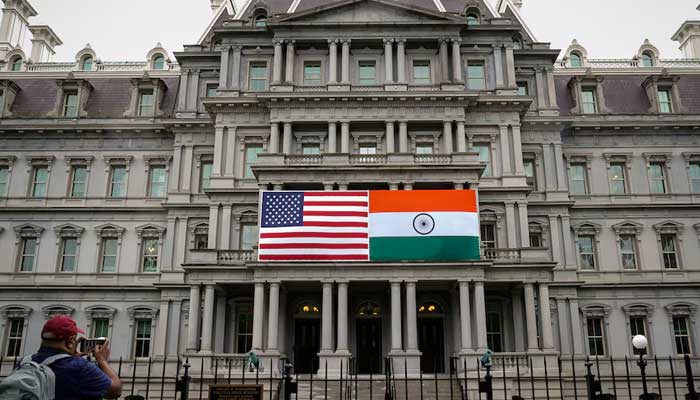
India’s foreign minister stated on Saturday that trade negotiations with Washington are ongoing, but there are certain areas where New Delhi must protect its interests, just days before significant new US tariffs are set to take effect.
Due to India’s increased purchases of Russian oil, its products face additional US tariffs that could reach up to 50%, among the highest imposed by Washington. A 25% tariff is already in effect, with the remaining 25% scheduled for August 27. A planned visit by US trade negotiators to New Delhi from August 25-29 was canceled, extinguishing hopes that the tariffs might be reduced or postponed.
“We have some red lines in the negotiations, to be maintained and defended,” Indian Foreign Minister Subrahmanyam Jaishankar said at an Economic Times forum event in New Delhi, specifically mentioning the interests of the country’s farmers and small-scale producers.
India-US trade discussions collapsed earlier this year after India declined to open its extensive agricultural and dairy sectors. Bilateral trade between the world’s largest and fifth-largest economies is valued at over $190 billion.
“It is our right to make decisions in our ‘national interest’,” Jaishankar affirmed.
Analysts at Capital Economics said on Friday that if the full US tariffs are enforced and remain in place, the impact on India’s economic growth would be a 0.8 percentage point reduction this year and the next. “The longer-term damage could be even greater as a high tariff could undermine India’s appeal as a global manufacturing hub.”
The Indian minister characterized US President Donald Trump’s policy announcements as “unusual.” “We have not had a US president who conducts his foreign policy so publicly as the current one, and [it] is a departure from the traditional way of conducting business with the world,” Jaishankar commented.
He also pointed out that Washington’s concern over India’s Russian oil purchases was not being applied to other major buyers like China and the European Union. “If the argument is oil, then there are [other] big buyers. If the argument is who is trading more [with Russia], then there are bigger traders,” he said, adding that Russia-European trade is larger than India-Russia trade.
The minister also mentioned that India’s purchases of Russian oil had not been brought up in prior trade talks with the US before the public announcement of tariffs.
