

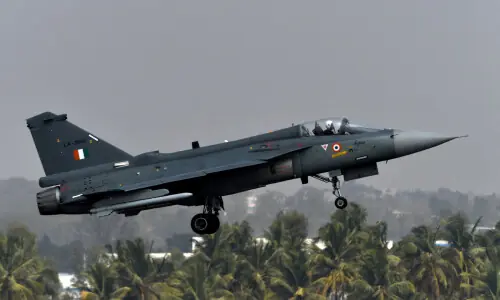
India is preparing to conduct a “Cold Start” military exercise aimed at assessing and enhancing its air defense capabilities. The drill is likely to be held in Madhya Pradesh and will focus on evaluating operational readiness against evolving aerial threats. A senior official confirmed the development, stating that the exercise would specifically assess the effectiveness and shortcomings of the current air defense systems.
Background and Objectives of the “Cold Start” Doctrine
The “Cold Start” doctrine, developed by the Indian armed forces, involves rapid and integrated offensive operations by combined arms units. It is designed to bypass traditional, slow troop mobilization to achieve conventional military objectives within a limited timeframe. The doctrine was created after Operation Parakram exposed India’s slow response to the 2001 Parliament attack. Its goal is to provide a swift, decisive, and limited military response to terrorism without escalating to a full-scale war. However, analysts have expressed concern that the doctrine carries a significant risk of triggering a nuclear conflict, given Pakistan’s possession of tactical nuclear weapons.
The “Cold Start” exercise will also include participation from industry partners, research and development agencies, academia, and other stakeholders.
Military Leadership’s Commitment to Countering Modern Aerial Threats
Speaking at a conference on “Counter UAVs & Air Defence Systems — The Future of Modern Warfare” in Delhi, India’s Chief of Integrated Defence Staff, Air Marshal Ashutosh Dixit, made a pointed reference to Pakistan. He stated, “They too are working to ‘become like India,’ so we must always stay a step ahead.” He highlighted the effectiveness of India’s counter-drone and GPS jamming systems during Operation Sindoor, which prevented damage from adversary drones. “But the adversary has also learned our capabilities. Next time, we have to be ahead and much better,” he added.
Air Marshal Dixit also outlined a vision for a future integrated defense system inspired by the “Sudarshan Chakra” concept, which aims to counter drones, UAVs, hypersonic weapons, and other threats. He emphasized the need for systems that can be used in both peace and wartime, recognizing that anti-social elements are also acquiring drone technology, which necessitates widespread counter-drone capabilities.
