

ISLAMABAD, PAKISTAN:
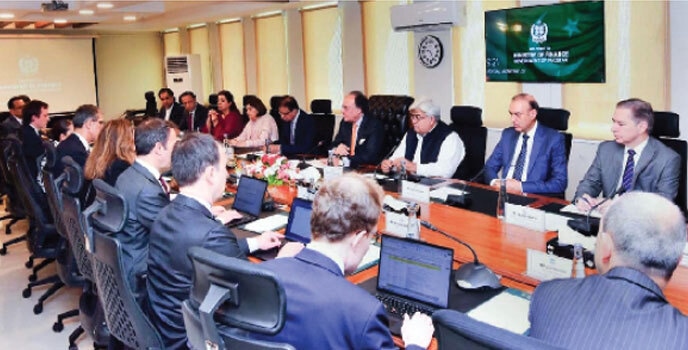
An International Monetary Fund (IMF) mission, led by Iva Petrova, has commenced formal negotiations with Pakistan’s economic team, headed by Finance Minister Muhammad Aurangzeb, to review the implementation of the $7 billion Extended Financing Facility (EFF) and the $1.1 billion Resilience & Sustainability Facility (RSF).
The review, covering performance through end-June 2025, presents a mixed record. While benchmarks for the critical power sector were met, revenue collection emerged as a significant weak point, falling short by approximately Rs1.2 trillion—nearly 1 percent of GDP—in the last fiscal year. Similar shortfalls have been noted in the first two months of the current fiscal year, necessitating an agreement on corrective measures to meet the upcoming biannual targets.
Revenue Shortfalls and Investment Hurdles
The opening session included key stakeholders such as the State Bank of Pakistan governor, the finance secretary, and the chairman of the Federal Board of Revenue (FBR). The mission, which will stay for nearly two weeks, will engage in forward-looking discussions to accelerate implementation of end-December 2025 targets.
A key point of contention being raised by Pakistan is the long-delayed implementation of the brownfield petroleum refinery policy, which has stalled about $6 billion in fresh investment intended for refinery upgrades. Officials argue that this policy aligns directly with the RSF’s climate objectives, as the upgrades would enable the production of petroleum products meeting European standards with minimal carbon and sulfur emissions. The impasse stems from a commitment under the IMF programme not to grant new tax exemptions, effectively blocking the promised sales tax and duty relief on required equipment, creating significant cash flow issues for refineries.
The Flood Factor and Fiscal Space
Pakistani authorities are urging the IMF to consider the devastating impact of flood losses when assessing programme performance. Although the review is based on pre-flood targets, the government is seeking relaxations on the primary budget surplus and fiscal deficit conditions. The goal is to create much-needed fiscal space for flood-related spending without resorting to new taxes or cutting essential development expenditures.
The government also faces the challenge of justifying its decision to utilize one-third of the budget allocated for natural disasters to clear Rs130 billion in past dues owed to commercial banks for remittance incentives. This use of the emergency fund will need careful justification as the authorities simultaneously seek flood-related relief.
Stalled Structural Reforms
While Pakistan has successfully met almost all Quantitative Performance Criteria for end-June 2025, it is lagging in several structural benchmarks and indicative targets. Notably, the government has failed to publish the Governance and Corruption Diagnostic Report, stalling the associated governance action plan. Similarly, legislation related to the governance of State-Owned Enterprises (SOE) remains stagnant, contrary to commitments.
Furthermore, the implementation and collection of the agricultural income tax laws, which were successfully enacted across all provinces, face uncertainty due to the ongoing floods in Punjab and Sindh.
The successful completion of this review is crucial, as it would make Pakistan eligible for the disbursement of approximately $1 billion (760 million Special Drawing Rights) by the end of next month. The success hinges on the two sides reaching an agreement on both the past performance and a credible forward-looking plan for structural reform and fiscal discipline.
