

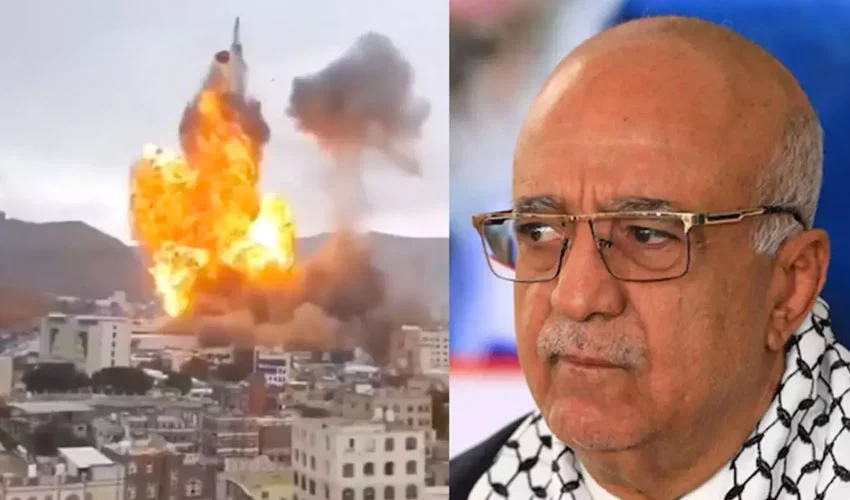
Yemen’s Houthi movement has confirmed that its prime minister, Ahmed al-Rahawi, was killed in an Israeli air strike on the capital, Sanaa, on Saturday, along with several other government ministers. The Houthis announced the deaths on Saturday, characterizing the strike as a deliberate attack on their government’s leadership.
Al-Rahawi, who headed the Houthi-led administration in areas under their control, was targeted during a workshop along with senior cabinet members.
Houthis Vow Vengeance Against Israel
Mahdi al-Mashat, the chairman of the Houthi Supreme Political Council, released a video message vowing revenge against Israel. “We shall take vengeance, and we shall forge from the depths of wounds a victory,” he declared. The Houthi leadership emphasized that government operations would continue despite the deadly attack, framing the deaths as motivation to strengthen their military capabilities.
Israel Expands Strikes on Houthi Leadership
The Israeli military confirmed it carried out strikes on Houthi targets in Sanaa, including military sites and the presidential palace, stating it was a response to recent missile attacks launched by the group. Israeli Defense Minister Israel Katz had earlier signaled a strategic shift, noting that Israel intended to directly target Houthi leadership—an approach similar to its strategy against groups like Hamas, Hezbollah, and Islamic Jihad.
Regional Tensions Escalate
The air strike came just days after the Houthis claimed responsibility for a missile attack on southern Israel, which was intercepted by Israeli defenses. The group has also continued its attacks on commercial shipping in the Red Sea and Gulf of Aden, which they claim are in solidarity with Palestinians in Gaza.
Tensions in the region remain high, with analysts warning that targeted assassinations of Houthi leaders could further escalate the conflict and expand Israel’s military engagement in Yemen.
