

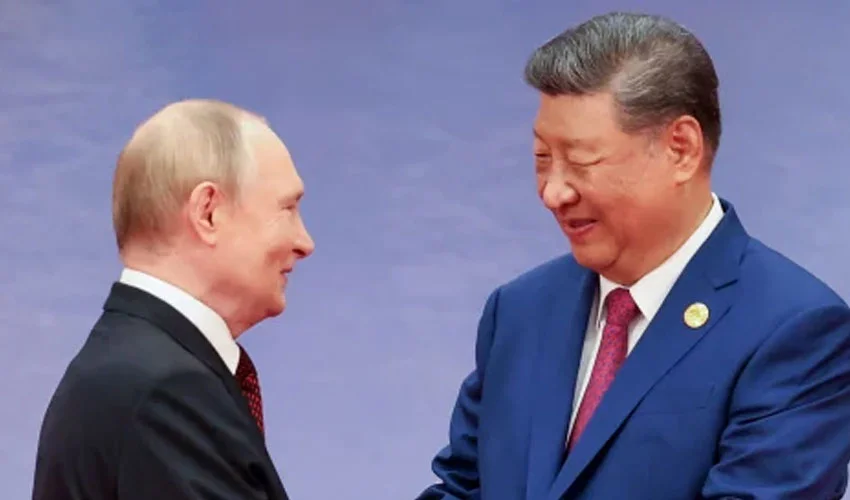
Chinese President Xi Jinping welcomed Russian President Vladimir Putin and North Korean leader Kim Jong Un in Beijing on Tuesday, in a rare trilateral gathering seen as a direct challenge to Western influence and alliances. Xi hosted Putin for official talks at the Great Hall of the People and later invited him to his personal residence, where he hailed the Russian president as an “old friend.” Hours later, reports confirmed Kim’s armored train had arrived in the Chinese capital.
On Wednesday, the three leaders are set to appear together at a massive military parade marking the 80th anniversary of Japan’s surrender in World War II. Analysts believe the event underscores Xi’s vision for a “new global order” as tensions with the West continue to intensify.
Prospect of Closer Defense Ties
The Beijing summit takes place just months after Russia and North Korea signed a mutual defense treaty and as China deepens its energy and security ties with Moscow. Russia’s Gazprom and the China National Petroleum Corporation inked a deal on Tuesday for increased gas supplies and a new pipeline that could fuel China for the next 30 years.
Experts warn that the parade could signal closer military cooperation among the three states. Youngjun Kim, an analyst with the U.S.-based National Bureau of Asian Research, wrote that “trilateral military exercises between Russia, China and North Korea seem nearly inevitable.”
Kim Jong Un’s High-Stakes Diplomacy
For Kim, the parade represents his most significant diplomatic stage yet. North Korea has reportedly sent 15,000 troops to support Russia’s war in Ukraine, and South Korean intelligence estimates that at least 600 have died in fighting in the Kursk region. Before his China visit, Kim inspected a missile laboratory—a calculated show of strength, according to analysts, aimed at positioning himself as a nuclear power before standing alongside Xi and Putin.
Growing Western Concerns
Xi’s sharp remarks on Monday at a summit of non-Western leaders, where he urged nations to resist “hegemonism and power politics,” were widely seen as a swipe at Washington. The gathering also comes as U.S. President Donald Trump seeks to highlight his peacemaking credentials despite Russia’s ongoing war in Ukraine. Any sign of a tighter Moscow-Beijing-Pyongyang axis could undercut those claims and deepen Western concerns about the rise of a new military bloc in Asia.
China’s “Victory Day” parade will showcase advanced military hardware to an estimated 50,000 spectators. Organizers also plan to release 80,000 peace doves during the event, even as global alarm mounts over the trio’s closer alignment.
