

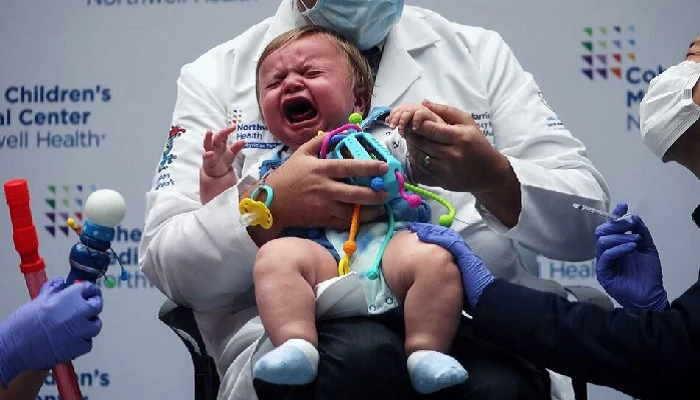
The United Nations announced on Tuesday that global infant vaccination levels have stabilized after a decline during the COVID-19 crisis. However, the organization issued a warning that misinformation and drastic cuts in aid are exacerbating dangerous coverage gaps, putting millions of children at risk.
According to data published by UN health and children’s agencies, in 2024, 85% of infants globally, or 109 million children, received three doses of the diphtheria, tetanus, and pertussis (DTP) vaccine. The third DTP dose serves as a key indicator for overall global immunization coverage. This represents a “modest” gain of a one-percentage-point increase and an additional one million children covered compared to the previous year.
Despite these slight improvements, nearly 20 million infants missed at least one of their DTP doses last year. This figure includes 14.3 million “zero-dose” children, who never received a single shot. While this is a minor improvement from the 14.5 million “zero-dose” children reported by the UN in 2023, it is still 1.4 million more than in 2019, before the COVID-19 pandemic severely disrupted global vaccination programs.
“The good news is that we have managed to reach more children with life-saving vaccines,” stated UNICEF chief Catherine Russell in a joint announcement. “But millions of children remain without protection against preventable diseases.”
The Dual Threat: Access and Misinformation
While a lack of access remains the primary cause of low vaccination coverage globally, the UN agencies also highlighted the significant threat posed by misinformation. WHO vaccine chief Kate O’Brien informed reporters that diminishing trust in “hard-earned evidence around the safety of the vaccines” is contributing to alarming immunity gaps and disease outbreaks.
This issue is particularly pronounced in the United States, where Health Secretary Robert F. Kennedy Jr. has long been accused of disseminating vaccine misinformation, including about the measles vaccine. This situation is particularly concerning as the US grapples with its worst measles epidemic in 30 years.
The report revealed that in the past year, 60 countries experienced large and disruptive outbreaks of measles, a highly contagious disease. This nearly doubled the 33 outbreaks reported in 2022. Although an estimated two million more children worldwide were vaccinated against measles in 2024 compared to the previous year, the global coverage rate remains significantly below the 95% threshold required to prevent its widespread transmission.
Varying Progress Across Income Brackets
On a more positive note, Tuesday’s report indicated that vaccine coverage against a range of diseases saw a slight increase last year in the 57 low-income countries that receive support from the vaccine alliance Gavi. Gavi chief Sania Nishtar commented, “In 2024, lower-income countries protected more children than ever before.”
However, the data also pointed to emerging “signs of slippage” in upper-middle and high-income countries, where vaccination coverage had previously been at least 90%. O’Brien underscored the gravity of this trend, stating, “Even the smallest drops in immunisation coverage can have devastating consequences.”
The UN emphasizes the critical need for sustained efforts to ensure equitable access to vaccines worldwide and to combat the spread of misinformation to protect global child health.
