

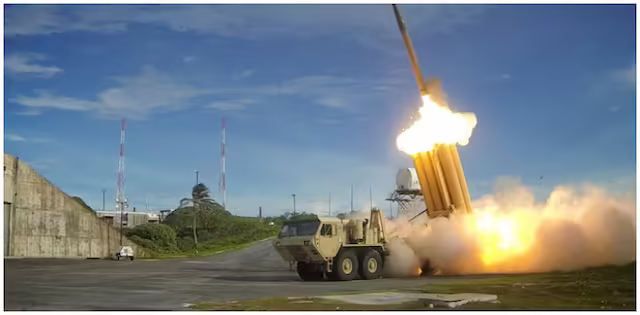
BERLIN/WASHINGTON—In a strategic move to capitalize on Europe’s rapid military build-up, U.S. defence contractor Lockheed Martin is actively seeking to market its advanced Thaad (Terminal High Altitude Area Defense) missile defence system to buyers across the continent. This push comes as European governments accelerate military spending in direct response to Russian aggression and rising threats.
In an interview published on Friday with the German newspaper Handelsblatt, Michael Williamson, the president of Lockheed Martin International, confirmed that the company is in negotiations with potential customers for the system, which is valued at more than 1 billion euros ($1.17 billion).
The Thaad system is being positioned as a potential component of the European Skyshield Initiative, a vast air-defence project led by Germany. The paper suggests Thaad is an alternative or complement to Israel’s Arrow 3 system, which Berlin has already selected.
The Urgency of Drone Threats
European defence budgets have soared since Russia’s invasion of Ukraine in 2022, prompting governments, including Germany, to plan hundreds of billions of euros in military investments.
Recent security incidents—including suspected Russian drones entering NATO airspace over countries like Denmark and Poland—have created a heightened sense of urgency to bolster layered missile and drone defences. This urgent demand has intensified competition among major global contractors, attracting both Northrop Grumman and Lockheed Martin to aggressively compete for major regional contracts.
Williamson told the paper that he sees the greatest growth prospects for the company over the next five years in markets outside the U.S., particularly in Europe.
Transatlantic Competition and Political Hesitation
To secure future contracts in Germany, Lockheed Martin’s strategic partnership with the German defence giant Rheinmetall is viewed as essential. Williamson highlighted that this cooperation not only creates local jobs but also “opens doors to political decision-makers,” according to Handelsblatt.
However, the path to European dominance is not clear-cut. European governments remain politically wary of U.S. dominance in military procurement. This caution was recently demonstrated by Denmark’s rejection of the U.S. Patriot system in favour of the European-made SAMP/T.
This rejection underscores a broader European push for greater defence autonomy and support for its own burgeoning defence industrial base. While the advanced capabilities of the Thaad system are attractive given the current threat environment, Lockheed Martin will need to navigate this political resistance and the growing European preference for collective, continent-made defence solutions.
