

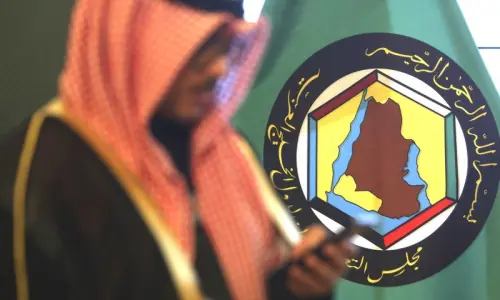
In the wake of a deadly Israeli strike on Doha earlier this month, Gulf Cooperation Council (GCC) countries have pledged significant steps to bolster their collective defense capabilities. These measures include plans to increase intelligence sharing, develop new missile warning systems, and hold joint defense drills. Following an emergency Arab-Islamic summit where leaders expressed alarm over Israel’s attacks, GCC officials met in Doha to discuss military intelligence unification. The six-member political and economic alliance—comprising Bahrain, Kuwait, Oman, Qatar, Saudi Arabia, and the United Arab Emirates—has agreed to expand intelligence sharing through a Unified Military Command.
New Title: New Military Strategy and Regional Threats
The bloc announced it will fast-track the creation of a regional early-warning system to counter ballistic missiles and share the “air situation” with all affected countries. The agreed measures also include joint troop and command-center drills within three months, followed by live air defense exercises. According to the statement, continuous efforts will be undertaken across military and intelligence sectors to enhance Gulf security cooperation and integrate security systems to address all risks and challenges. The council prioritized ensuring the security and stability of all GCC countries, warning of the risks posed to a region already unsettled by months of conflict.
The decision comes just days after Israel targeted a Hamas delegation in Doha that was discussing a ceasefire for the war in Gaza. The strike killed five members of the Palestinian group, including the son of its exiled political leader, along with a Qatari security officer. Qatar stated it had received no prior warning before the explosions. During the meeting, the council denounced the Israeli strikes as a “dangerous and unacceptable” provocation.
The delegates in Doha included senior defense officials from all six Gulf states, a presence that officials said underscored the urgency of forging a common regional shield. While the GCC has long discussed greater military integration, these efforts have often been hindered by political rivalries and differing threat perceptions. The agreement reached on Thursday, amid the gravity of Israel’s unprecedented strike inside Qatar, was presented as a turning point for the bloc.
