

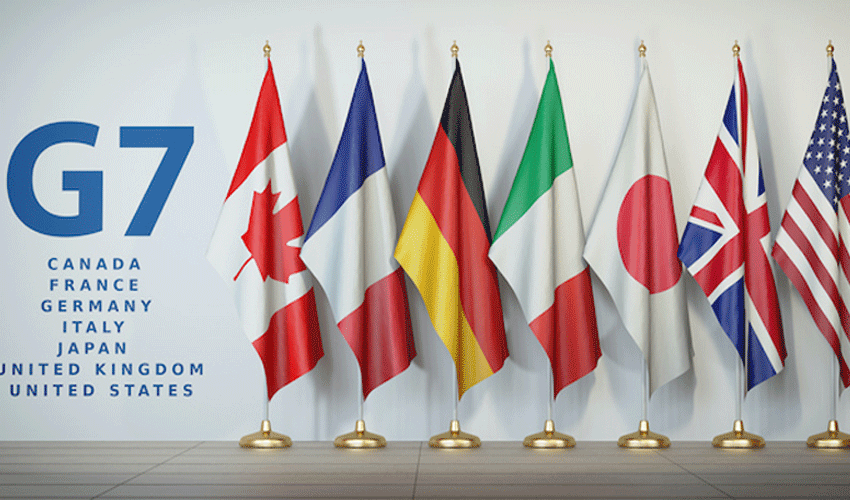
The Group of Seven (G7) nations and the United States have reached a significant consensus to ease potential tax burdens on American and British companies. They’ve done this by backing a “side-by-side” system that offers exemptions from certain parts of the global corporate minimum tax framework, aiming to bring greater stability to the international tax system.
This agreement, announced in a joint statement by Canada (which currently holds the rotating G7 presidency), follows the U.S. decision to withdraw Section 899 from a proposed tax and spending bill. This section, introduced earlier this year under an executive order by President Donald Trump, had threatened to impose retaliatory taxes on countries implementing the 2021 global corporate minimum tax agreement. Trump had argued that the U.S. was no longer bound by the agreement, which was negotiated under the Biden administration with over 130 countries as part of the OECD-led Inclusive Framework.
In response, the G7 has now agreed to a parallel approach. This acknowledges existing U.S. minimum tax laws while striving to prevent double taxation and provide tax certainty for multinational corporations. A statement from the U.S. Treasury Department confirmed that this revised approach “preserves important gains made in addressing base erosion and profit shifting” and signals renewed cooperation with the Inclusive Framework on future negotiations. The Department also mentioned that further technical discussions are expected on how this new system will be developed and implemented globally.
UK businesses, which had expressed growing concern recently about potentially paying significantly higher taxes under Section 899, have welcomed this development. British Finance Minister Rachel Reeves stated that the agreement would offer “much-needed certainty and stability” for companies at risk of being disproportionately affected. “Today’s agreement marks an important step forward. However, more work remains to be done to tackle aggressive tax planning and avoidance,” Reeves added.
The G7, comprising Canada, France, Germany, Italy, Japan, the United Kingdom, and the United States, emphasized that the agreement reflects its commitment to a tax system that is both fair and predictable, while also safeguarding national interests. Officials reiterated the need for a solution that is “acceptable and implementable to all jurisdictions within the Inclusive Framework.”
The 2021 global tax pact, led by the OECD, introduced a 15% global minimum corporate tax to stop companies from shifting profits to low-tax jurisdictions. However, this deal has faced political challenges, with the U.S. reconsidering its participation under the Trump-led administration, causing concern among allies and multinational corporations alike.
