

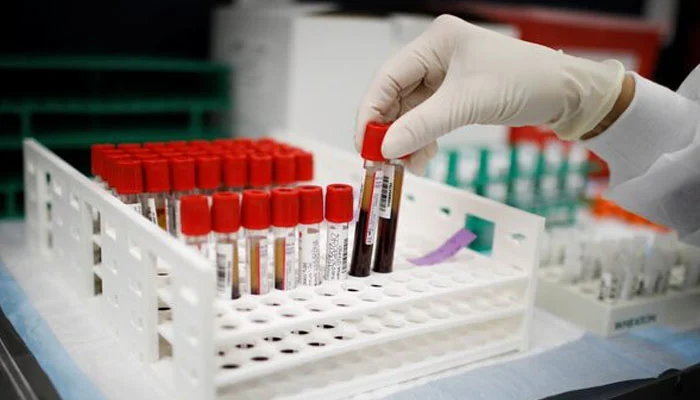
France’s national blood supply agency, the French Blood Establishment (EFS), has announced the remarkable discovery of a new blood type, dubbed “Gwada negative.” A French woman from the Caribbean island of Guadeloupe has been identified as the only known carrier of this unique blood type, a finding that comes 15 years after researchers first encountered a perplexing blood sample.
A Decade-Long Scientific Breakthrough
The initial discovery dates back to 2011, when a “very unusual” antibody was detected in a 54-year-old patient living in Paris who was undergoing routine tests ahead of surgery. At the time, resource limitations prevented further in-depth research, as noted by Thierry Peyrard, a medical biologist at the EFS involved in the discovery.
The mystery was finally unraveled in 2019, thanks to advancements in “high-throughput DNA sequencing,” which pinpointed a specific genetic mutation. The EFS proudly announced this as the 48th blood group system discovered worldwide, with its recognition officially granted by the International Society of Blood Transfusion (ISBT) in early June in Milan. Prior to this, the ISBT had recognized 47 blood group systems.
The Uniqueness of “Gwada Negative”
Peyrard stated that this woman “is undoubtedly the only known case in the world.” He emphasized her unique compatibility, saying, “She is the only person in the world who is compatible with herself.” The woman inherited this novel blood type from both her parents, each of whom carried the mutated gene. The name “Gwada negative,” a nod to the patient’s Guadeloupean origins and its phonetic appeal across languages, resonated well with the experts.
The initial ABO blood group system was identified in the early 1900s. Advances in DNA sequencing have significantly accelerated the discovery of new blood groups in recent years.
Peyrard and his colleagues are now actively seeking other individuals who might share this rare blood type. The EFS highlighted the broader impact of such discoveries, stating, “Discovering new blood groups means offering patients with rare blood types a better level of care.” This ongoing research underscores the importance of continued exploration in blood biology for enhanced patient treatment and understanding of human genetic diversity.
