

A collection of disparate national developments highlights ongoing challenges in security, governance, and infrastructure across Pakistan, according to recent statements and police reports.
### Security and Urban Crime Mitigation
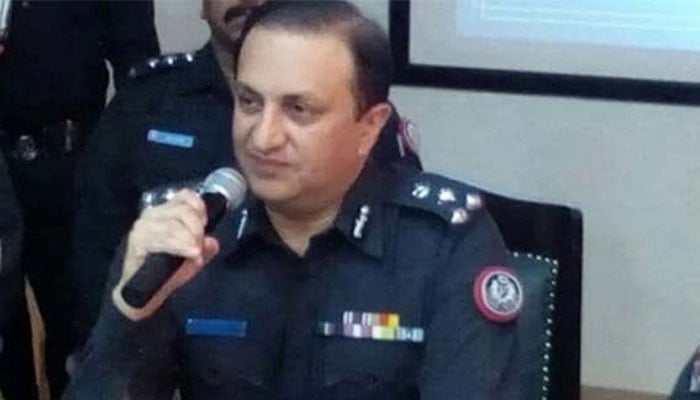
Karachi Police Chief Javed Alam Odho announced an 18 percent reduction in mobile phone snatching incidents, though he emphasized that the crime remains the most frequent offense and is typically accompanied by violence. In related law enforcement action, police confirmed that suspect Bilal Abbas was killed during an exchange of fire, and his body was subsequently transferred to a local hospital.
Concurrently, Pakistan Customs reported a significant achievement in anti-smuggling operations, having confiscated gold and silver valued at over PKR 306 million in the span of the last five months.
### Infrastructure Paralysis and Cost Escalation
Severe, widespread dense fog significantly disrupted national movement, leading authorities to close several major motorways due to critically low visibility. Closures included key sections of the M1 (Rashakai to Peshawar), M2 (Hiran Minar to Thokar Niaz Baig), M3 (Faizpur to Rajana), and the M5 (Multan to Zahir Pir, and Rohri to Rahim Yar Khan).
In transport infrastructure news, the Karachi Yellow Line Project has experienced a staggering 190 percent cost increase. Federal Minister Ahsan Iqbal voiced serious concern over the project’s sluggish pace during the last six years.
Separately, road safety incidents were recorded, including a fatal collision on Motorway M4 near Khanewal between a bus and a trailer, resulting in the death of the bus hostess and injuries to four passengers. Another collision involving a passenger coach and a car occurred near the Billy Tung oil depot in Kohat, Khyber Pakhtunkhwa.
### Governance and Political Funding
The Pakistan Tehreek-e-Insaf (PTI) is facing a notable financial deficit and has reportedly instituted a policy requiring its parliamentarians to contribute 10 percent of their monthly salary to sustain party operations.
Meanwhile, the Federal Finance Ministry has committed to promoting fiscal transparency by promising to publish detailed asset information of high-ranking federal and provincial officials on a public website by the end of the next fiscal year. This initiative will also include an audit and scrutiny of these assets.
Prime Minister Muhammad Shehbaz Sharif conducted meetings with global leaders during his official visit to Turkmenistan. Domestically, Federal Minister of State for Interior, Senator Talal Chaudhry, issued a political caution, asserting that the political career of anyone who “crosses the red lines” will be terminated. A high-level political committee has also been finalized, incorporating key figures such as Mahmood Khan Achakzai, Allama Raja Nasir Abbas, and regional representatives Khalid Khurshid (AJK) and Sardar Qayyum Niazi (Gilgit-Baltistan).
### Social Issues and Economic Anomalies
Umme Rubab Chandio, a representative from Dadu District, issued a sharp critique of the local power structure, stating that the feudal Sardaari system in Sindh has become a “cancer” that negatively impacts the lives of thousands.
In Lahore, a business owner specializing in motorbikes sold on installment plans incurred an unexpected administrative liability, finding himself responsible for PKR 2.3 million in accumulated traffic violation fines linked to the vehicles he sold.
In development initiatives, Chief Minister Sindh Murad Ali Shah chaired a meeting focused on strategies for the agricultural sector, attended by Agriculture Minister Muhammad Bakhsh Maher and the Chief Secretary. Furthermore, a delegation from the French Development Agency (AFD) visited the NGC Headquarters in Lahore.
