

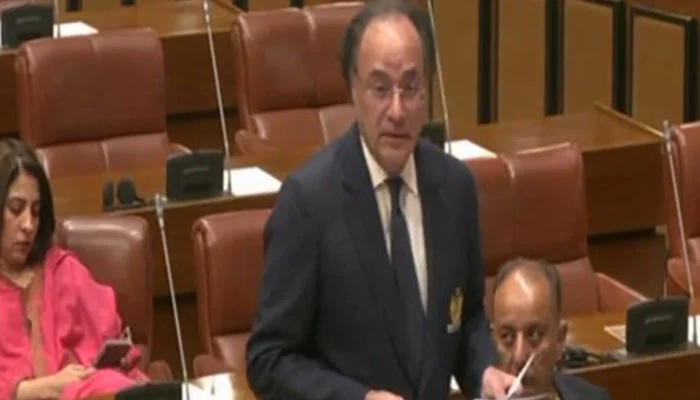
Finance Minister Muhammad Aurangzeb announced a positive development for the salaried class on Saturday, revealing that the income tax rate for individuals earning up to Rs1.2 million a year will decrease from 5% to 1%.
“The salaried class bears the burden of inflation and also pays [due] taxes. The reduction in the income tax is already part of the proposed budget [for FY26]. On the directions of Prime Minister Shehbaz Sharif, the government has reduced tax on those earning from Rs600,000 to Rs1.2 million per year from [the proposed] 2.5% to a [mere] 1%,” Aurangzeb stated during a Senate session on Saturday.
“We [the government] hope that this move will not only result in the increase of disposable income of the [salaried] class but also restore their trust in the taxation system,” the finance czar remarked.
This development follows the government’s efforts in its Rs17.57 trillion budget for FY26, which sought across-the-board cuts in income tax rates for the salaried class. Initially, the tax rate for individuals earning between Rs600,000 and Rs1.2 million annually was proposed to be cut from the existing 5% to 2.5%. As confirmed by Aurangzeb, this has now been further reduced to 1%. This decision comes after PM Shehbaz’s earlier directive this week to the federal cabinet regarding the 1% tax for this salary bracket.
Meanwhile, for those earning up to Rs2.2 million annually, the tax rate has been reduced from 15% to 11%—a 4% decrease in the FY26 budget. For individuals earning between Rs2.2 million and Rs3.2 million, the tax rate is expected to ease from 25% to 23%.
The budget also includes measures to slow down brain drain. A 1% reduction in surcharge has been proposed for those earning over Rs1 million, aimed at retaining highly skilled professionals who might otherwise consider leaving the country due to high taxes.
Speaking on the Senate floor, the finance minister emphasized that the government has taken steps for welfare in its proposed budget and highlighted that federal expenditure has only increased by 1.9%, a significant reduction compared to past hikes of up to 12%. He also confirmed that the initial 18% tax proposed on solar panels, intended to promote the local industry, has been reduced to 10%. He warned those hoarding imported solar panels, stating that action would be taken against individuals who had increased prices in advance.
It’s important to note that the government has set the Federal Board of Revenue’s (FBR) tax collection target at Rs14,131 billion—reflecting an 18.7% increase compared to the previous fiscal year. The provinces’ share in federal taxes will amount to Rs8,206 billion. With the non-tax revenue target set at Rs5,147 billion, the federal government’s net income is expected to be Rs11,072 billion, while overall federal expenditures are estimated at Rs17,573 billion, of which Rs8,207 billion will be allocated for mark-up payments.
