

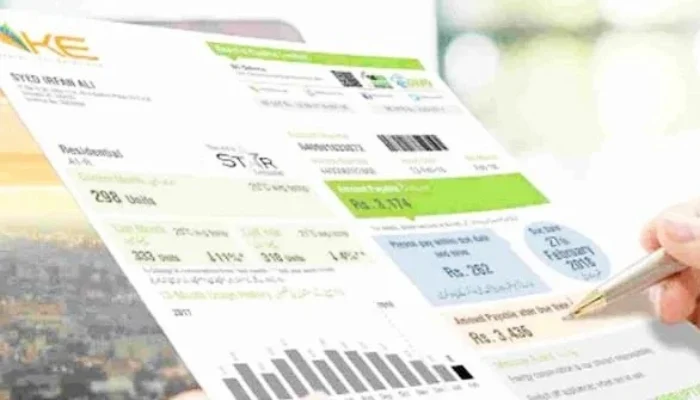
Islamabad: In a decision set to bring significant relief to millions of electricity users, the federal government is reportedly on the verge of eliminating the Rs35 monthly Pakistan Television (PTV) fee currently added to electricity bills, as reported by The News. Prime Minister Shehbaz Sharif is expected to make a formal announcement soon, ending a long-standing levy that impacts over 40 million residential, commercial, and industrial power consumers nationwide.
This fee, which has been a persistent source of public dissatisfaction, generated approximately Rs1.5 billion per month—nearly Rs16 billion annually—for the state-run broadcaster through automatic deductions from utility bills. A senior official privy to the matter stated that this measure aims to ease the financial burden on the common citizen and provide tangible relief in electricity bills.
Paving the Way for Lower Electricity Tariffs
Earlier this week, in a significant move that could alleviate pressure on electricity pricing, the National Electric Power Regulatory Authority (Nepra) has slashed the national average Power Purchase Price (PPP) to Rs25.98 per unit for the fiscal year 2025-26. This represents a 3.77% (or Rs1.02/unit) reduction from the current Rs27/unit.
According to Nepra’s latest determination, the total national Power Purchase Price for FY26 has been set at Rs3.342 trillion. For the ex-Wapda Distribution Companies (XWDiscos), the PPP stands at Rs3.066 trillion or Rs26.34 per unit. This calculation excludes K-Electric’s share. Nepra’s decision sets the stage for subsequent tariff adjustments at the consumer end in the coming months.
Of the total projected PPP for XWDiscos, Rs1.125 trillion is allocated to fuel and variable operation and management (O&M) costs, while a substantial Rs1.941 trillion—or 63%—is earmarked for capacity charges. These capacity charges include costs for NTDC, Pak Matiari-Lahore Transmission Company (Pvt) Ltd (PMLTC) wheeling, and CPPA-G’s Ministry of Finance (MoF) component. Capacity charges alone are estimated at Rs6.484/unit/month, based on an average monthly Maximum Demand Indicator (MDI) of 24,943MW.
On a per-unit basis, energy charges for XWDiscos are calculated at Rs9.67/unit, while capacity charges amount to Rs16.67/unit, resulting in a total of Rs26.34/unit before transmission and distribution (T&D) losses. The new PPP is Rs1.02/unit lower than the ongoing fiscal year’s Rs27/unit average, when the total power purchase cost was Rs3.534 trillion.
The Central Power Purchasing Agency (CPPA-G), in its petition to NEPRA, outlined seven PPP scenarios for FY26, based on varying assumptions regarding demand growth (3–5%), exchange rates (Rs280–300/USD), and hydrological flows. Proposed fuel charges range from Rs8.16/unit to Rs9.19/unit, while capacity payments under different scenarios are projected between Rs16.04/unit and Rs16.45/unit—a continuation of the trend where capacity charges largely dominate the power purchase cost.
For comparison, in FY24, capacity charges stood at Rs16.22/unit, while energy charges were merely Rs6.73/unit. The total PPP for 2023-24 was Rs22.95/unit, underscoring a persistent upward trend in fixed power costs.
