

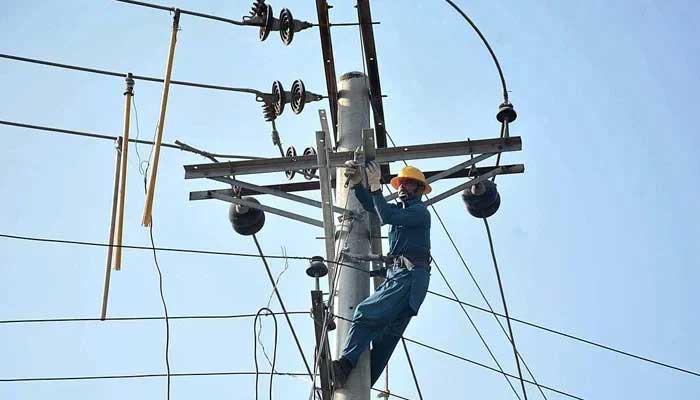
The federal government has decided to abolish provincial electricity duty on power bills starting July 1, and has formally informed all provincial chief ministers of this decision.
Federal Minister for Power, Awais Leghari, has sent a letter to the chief ministers of all provinces, notifying them of the federal government’s decision to scrap electricity duty and to explore “alternative mechanisms” for collecting provincial levies and duties.
In the letter, a copy of which was obtained by Geo News, the minister sought the support of all provincial chief executives in streamlining the billing structure. He highlighted the complexity arising from multiple charges, taxes, and duties currently collected through consumer bills. Leghari emphasized that high electricity tariffs already pose a significant challenge, and the additional burden of various levies further complicates the billing structure, making it difficult for consumers to understand and manage their electricity costs.
Leghari’s letter also outlined the federal government’s ongoing efforts to reduce power tariffs through various measures, including renegotiating Independent Power Producer (IPP) contracts, lowering the Return on Equity (ROE) for government-owned power plants, and implementing other structural reforms.
“In parallel, we are also committed to simplifying electricity bills so that they primarily reflect the actual cost of power consumption rather than serving as a collection mechanism for various additional charges,” he added. The minister urged provincial governments to explore alternative mechanisms for collecting provincial levies and duties, rather than continuing to use electricity bills as a collection channel.
He expressed confidence that this move will not only make electricity bills more transparent and easier to comprehend but also ensure that “consumers are paying only for the cost of electricity, rather than a mix of other charges.” The energy minister further sought the cooperation of all chief ministers in identifying and implementing alternative revenue collection methods, which he believes will be instrumental in ensuring the success of this initiative.
