

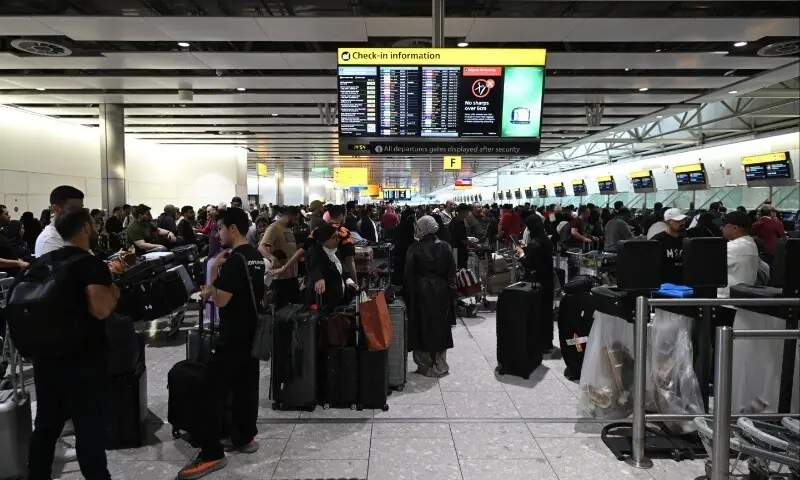
A cyberattack on Collins Aerospace, the provider of check-in and boarding systems, which is owned by RTX, disrupted operations at London’s Heathrow, Berlin Airport, and in Brussels on Saturday. The incident caused long queues, dozens of cancellations, and significant delays for passengers.
By early Sunday, the disruption had significantly eased, according to airport officials and data, although some delays continued. Regional regulators announced they were investigating the origin of the hacking incident. This event is the latest in a series of cyberattacks that have recently affected various sectors, from healthcare to the automotive industry. A breach at carmaker Jaguar Land Rover halted production, and another caused Marks & Spencer to lose hundreds of millions of pounds.
RTX described the incident as a “cyber-related disruption” and said it had impacted its MUSE software, which is used by several airlines. The company was not immediately available for comment on Sunday.
Berlin Brandenburg Airport stated on Sunday that problems persisted, but it was working with the company to resolve the issue. The airport added that a manual workaround was in place, and there were currently no major delays or cancellations.
Brussels Airport provided an update to passengers on Sunday, saying the cyberattack was having a “large impact on the flight schedule,” causing delays and cancellations.
Heathrow officials said early Sunday that recovery from the check-in system outage was ongoing and that the “vast majority of flights have continued to operate.” An analysis from aviation data provider Cirium indicated that delays at Heathrow were “low,” while Berlin experienced “moderate” delays and Brussels saw “significant” delays, but all were decreasing.
