

Kinshasa, Democratic Republic of Congo
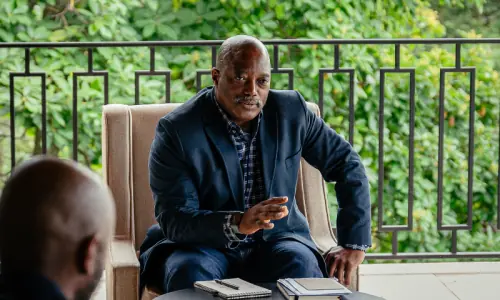
A military court in the Democratic Republic of Congo (DRC) has sentenced former President Joseph Kabila to death in absentia on charges of “treason.”
Kabila, 54, was neither present nor legally represented at the High Military Court trial in the capital, Kinshasa. He was found guilty of complicity with the M23 anti-government armed group, which has seized vast swathes of the resource-rich Congolese east, allegedly with support from Rwanda.
The former president left the vast Central African nation in 2023 but briefly resurfaced in M23-occupied Goma in May, a move that immediately caused disquiet in Kinshasa. Observers suggest the death sentence aims to decisively remove the possibility that Kabila could unite the opposition within the country, despite his exact current whereabouts being unknown.
His parliamentary immunity as a senator for life was lifted at the end of May to allow the trial to proceed. The DRC, which has been ravaged by conflict for over three decades, lifted a moratorium on the death penalty last year but has not carried out an execution since.
Military prosecutor General Lucien Rene Likulia had demanded death for Kabila, whose political party swiftly condemned the proceedings as a “political trial.” Likulia accused the ex-leader of plotting to overthrow President Felix Tshisekedi, with further charges against him including homicide, torture, and rape linked to the M23’s activities. The prosecutor alleged that Kabila, in coordination with Rwanda, sought to spring a coup against Tshisekedi, notably with the help of M23 leader Corneille Nangaa.
Kabila ruled the country between 2001 and 2019, having taken power after the assassination of his father, Laurent-Desire Kabila, a former rebel who toppled dictator Mobutu Sese Seko in 1997. Following his controversial visit to Goma in May, where he met local religious leaders in the presence of M23 spokesman Lawrence Kanyuka, the political rift deepened. Tshisekedi has branded Kabila the mastermind behind the armed group, while Kabila has in turn dubbed Tshisekedi’s government a “dictatorship,” vowing to seek its end.
Rwanda denies providing military backing to the M23, yet UN experts maintain its army played a “critical” role in the group’s offensive. While a peace agreement between the Congolese and Rwandan governments was signed in Washington in June, and a declaration of principle for a permanent ceasefire with the M23 was signed in Qatar in July, violence persists on the ground.
NGOs have continued to denounce severe abuses against civilians, including summary executions, gang rapes, and kidnappings. A United Nations investigation in early September concluded that all parties to the conflict may have committed war crimes and crimes against humanity.
Despite the capital sentence, Kabila’s physical arrest by the authorities appears unlikely at present. An appeal against the High Military Court’s verdict is possible before the Court of Cassation, although it would be restricted to claims of procedural irregularities, not a review of the case merits. Meanwhile, the sheer multitude of armed groups and militias in the DRC’s volatile east continues to fuel a climate of near-permanent insecurity, overshadowing the political drama unfolding in the capital.
