

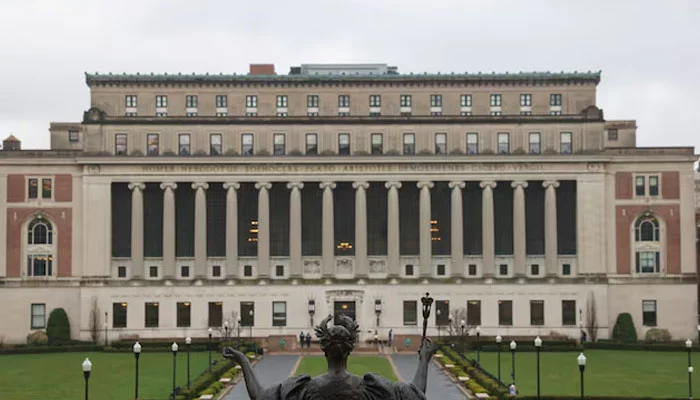
Columbia University announced on Wednesday that it will pay over $200 million to the US government as part of a settlement with President Donald Trump’s administration. This agreement aims to resolve federal investigations and restore the majority of the university’s suspended federal funding. Since returning to office in January, Trump has targeted several universities over the pro-Palestinian student protest movement that disrupted college campuses last year. He publicly welcomed the agreement between his administration and Columbia in a social media post late on Wednesday.
Funding Suspension and Columbia’s Response
In March, the Trump administration had penalized Columbia by canceling $400 million in federal funding, citing the university’s handling of last year’s protests. The administration contended that Columbia’s response to alleged antisemitism and harassment of Jewish and Israeli members of the university community was insufficient.
In a statement, Columbia affirmed, “Under today’s agreement, a vast majority of the federal grants which were terminated or paused in March 2025 — will be reinstated and Columbia’s access to billions of dollars in current and future grants will be restored.” Columbia also stated its agreement to settle investigations brought by the US Equal Employment Opportunity Commission for $21 million. The university highlighted that its deal with the Trump administration preserved its “autonomy and authority over faculty hiring, admissions, and academic decision-making.”
After the government’s funding cancellation, the school acquiesced later in March to a series of demands. These included increased scrutiny of departments offering courses on the Middle East and other concessions that were widely criticized by US academics. Last week, Columbia adopted a controversial definition of antisemitism that equates it with opposition to Zionism. The university also announced it would no longer engage with the pro-Palestinian group Columbia University Apartheid Divest.
Protester Reactions and Government Stance
The pro-Palestinian group Columbia University Apartheid Divest denounced the settlement on Wednesday, calling it a bribe. “Imagine selling your students out just so you can pay Trump $221 million dollars and keep funding genocide,” the group stated. Campus protesters had demanded an end to US support for Israel’s devastating military assault on Gaza and a commitment from the university to cease investing any of its $14.8 billion endowment in weapons manufacturers and companies that support Israel’s occupation of Palestinian territories.
Education Secretary Linda McMahon stated that Columbia agreed “to discipline student offenders for severe disruptions of campus operations, make structural changes to their Faculty Senate, bring viewpoint diversity to their Middle Eastern studies programs, eliminate race preferences from their hiring and admissions practices, and end DEI (diversity, equity and inclusion) programs.”
The government has labeled pro-Palestinian protesters as antisemitic. However, protesters, including some Jewish groups, argue that the government has wrongly conflated their criticism of Israel’s actions with antisemitism and their advocacy for Palestinian rights with support for extremism.
Terms of the Agreement and Trump’s Influence on Other Institutions
Wednesday’s announcement followed by one day Columbia’s decision to discipline dozens of students over a May pro-Palestinian protest where demonstrators occupied its main library. According to the deal’s terms, the agreement requires Columbia to “undertake a comprehensive review of its international admissions processes and policies.”
Columbia is mandated to designate an administrator within 30 days who will be answerable to the university president and responsible for overseeing the deal’s compliance. The agreement also stipulates that Columbia must appoint an additional administrator to investigate alleged antisemitism and propose recommendations.
Trump has also attempted to leverage federal funding with other institutions, including Harvard University. His administration has tried to deport foreign pro-Palestinian students, including those at Columbia, but has encountered judicial roadblocks. Rights advocates have raised concerns regarding due process, academic freedom, and free speech in response to these actions.
