

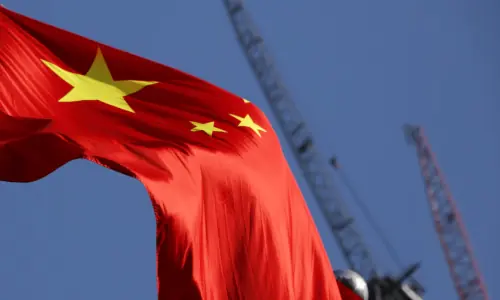
Beijing, China
China has officially launched a new visa programme to aggressively court foreign talent in the fields of science and technology, an effort that underscores its strategic push to position itself as a world leader in these sectors ahead of the United States.
The Chinese measure, first announced in August, stands in stark contrast to recent US policy shifts. Across the Atlantic, the Trump administration rattled the American tech industry last month by suddenly introducing new and substantially expensive changes to its skilled worker visas.
The new Chinese ‘K visa’ significantly simplifies the immigration process for eligible applicants, according to state media. This streamlined approach signals Beijing’s intent to capitalise on global shifts in immigration policy.
“Against the backdrop of some countries retracting, turning inward, and sidelining international talent, China has keenly seized this important opportunity and promptly introduced this policy,” the state newspaper People’s Daily argued in a comment piece on Tuesday.
Unlike many other visa categories, the K visa does not mandate an invitation from a domestic employer or entity for the applicant. State news agency Xinhua reported in August that the visa will offer holders “more convenience in terms of the number of permitted entries, validity period, and duration of stay.”
The official classification for those eligible to apply is “young foreign scientific and technological talents,” though the exact requirements for age, educational background, and work experience remain publicly unclear. Xinhua noted that visa-holders will be permitted to “engage in exchanges in fields such as education, culture, and science and technology, as well as relevant entrepreneurial and business activities.”
Meanwhile, the US tech sector has expressed deep concern over unexpected changes to the H-1B visa procedure. These visas are widely used to sponsor foreign workers with specialised skills—such as scientists and engineers—but the new H-1B policy now requires a substantial one-time fee of $100,000. Indian nationals currently account for nearly three-quarters of the permits allotted via the annual lottery system.
The People’s Daily article on Tuesday also attempted to preempt domestic criticism, pushing back at what it called “strange rumours” suggesting the new visa would create “immigration problems” in China. “The so-called ‘immigration crisis’ will not materialise, we should have cultural confidence,” the paper asserted, indicating that Beijing is prepared to defend this strategic move to open its borders to global expertise.
