

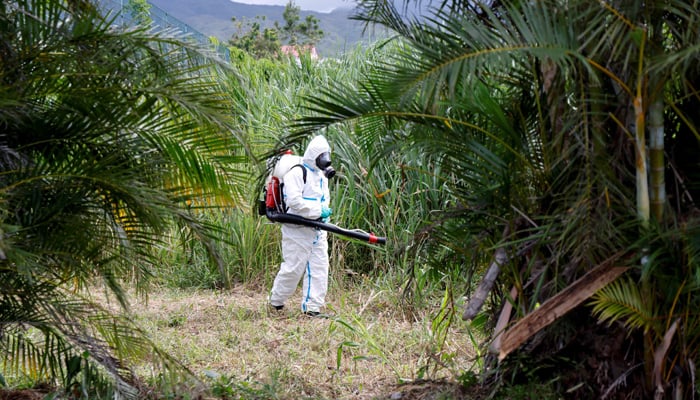
Over 7,000 cases of the mosquito-borne chikungunya virus have been reported in China’s Guangdong province since July, leading authorities to implement measures reminiscent of the COVID-19 pandemic.
According to the BBC, the outbreak is primarily centered in the city of Foshan, which is the most affected area, but at least 12 other cities in Guangdong have also reported infections. Nearly 3,000 cases were confirmed in just the last week. On Monday, Hong Kong reported its first case, a 12-year-old boy who had recently traveled to Foshan.
Chikungunya is a virus that causes fever and severe joint pain. It is not contagious between people but spreads through the bite of an infected mosquito. While it is rare in China, the virus is more common in South and Southeast Asia.
In response to the outbreak, authorities are urging individuals with symptoms to get tested and are fining residents up to 10,000 yuan ($1,400) for failing to remove stagnant water from their homes. Other efforts include releasing mosquito-eating fish and “elephant mosquitoes” to control the virus-spreading insects. Foshan has also deployed drones to detect sources of stagnant water.
Despite these aggressive measures, the outbreak has generated public concern and online debate, with some social media users questioning if the COVID-like restrictions are warranted. One user on the Chinese social media platform Weibo wrote, “These feel so familiar… but are they really necessary?” Another commented, “What’s the point of the quarantine? It’s not like an infected person will go around biting people.” Officials, however, state that all cases so far have been mild, with 95% of patients being discharged within a week.
