

The US Federal Aviation Administration (FAA) and Boeing have privately issued notifications affirming the safety of fuel switch locks on Boeing planes, according to a document seen by Reuters and confirmed by four sources with knowledge of the matter.
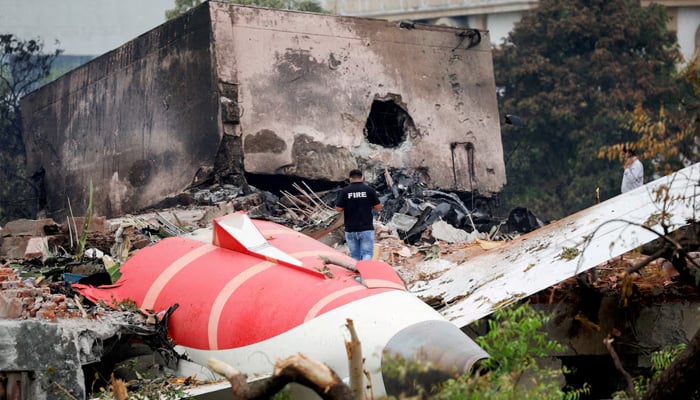
This FAA’s Continued Airworthiness Notification, issued on July 11, follows a preliminary report into the Air India Boeing 787-8 crash last month, which killed 260 people and raised questions regarding engine fuel cutoff switches.
The FAA’s notification to Civil Aviation Authorities, reviewed by Reuters, stated: “although the fuel control switch design, including the locking feature, is similar on various Boeing airplane models, the FAA does not consider this issue to be an unsafe condition that would warrant an Airworthiness Directive on any Boeing airplane models, including the Model 787.” When asked for comment, the FAA stated it had nothing further to add beyond the notification.
Boeing also referenced the FAA notification in a Multi-Operator-Message sent to airlines in the past few days, indicating that the planemaker is not recommending any immediate action, as confirmed by two sources with direct knowledge. Boeing, when approached for comment, directed Reuters‘ questions back to the FAA.
The preliminary investigation report into the crash by India’s Aircraft Accident Investigation Bureau (AAIB) referenced a 2018 FAA advisory. This advisory recommended, but did not mandate, operators of several Boeing models, including the 787, to inspect the locking feature of the fuel cutoff switches to ensure they could not be moved accidentally. The report noted that Air India had stated it did not carry out these suggested FAA inspections because the 2018 advisory was not a mandate. However, it also mentioned that maintenance records indicated the throttle control module, which includes the fuel switches, was replaced in 2019 and 2023 on the crashed aircraft. The report further noted that “all applicable airworthiness directives and alert service bulletins were complied on the aircraft as well as engines.”
ALPA India, which represents Indian pilots at the Montreal-based International Federation of Air Line Pilots’ Associations, issued a statement on Saturday rejecting any presumption of pilot error and called for a “fair, fact-based inquiry.” ALPA India President Sam Thomas told Reuters on Sunday, “The pilots body must now be made part of the probe, at least as observers.” In a letter posted on X, ALPA India stated that the preliminary investigation report referred to the 2018 FAA advisory “concerning the fuel control switch gates, which indicates a potential equipment malfunction.”
The report detailed that in the flight’s final moments, one pilot was heard on the cockpit voice recorder asking the other why he cut off the fuel, to which “The other pilot responded that he did not do so.” It also noted that the fuel switches had almost simultaneously flipped from ‘run’ to ‘cutoff’ just after takeoff. The report did not explain how the switches could have flipped during the flight.
On Saturday, two US safety experts expressed their support for ALPA India’s request to be observers in the probe, but also stated that the investigation report did not suggest a bias towards pilot error. John Cox, a pilot and former ALPA US representative, commented that the AAIB’s report appeared objective and fair.
