

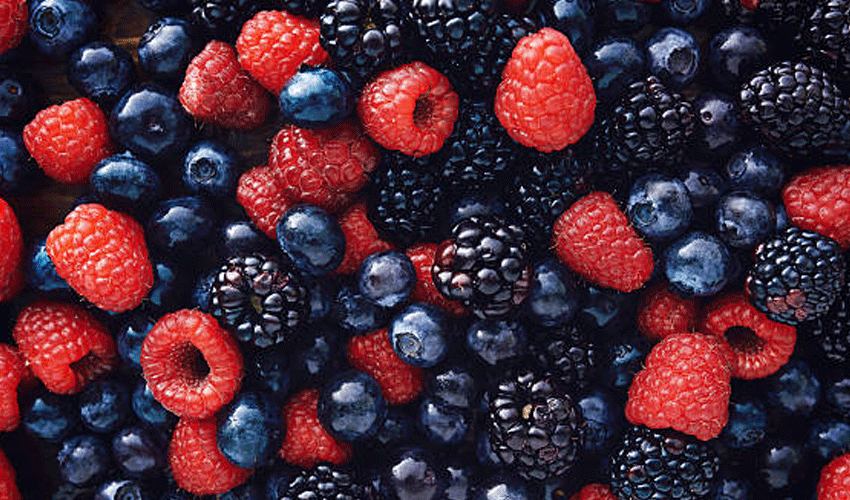
Recent research suggests that blueberries may significantly reduce the risk of dementia. According to scientific analysis, this specific fruit offers remarkable benefits for individuals aiming to improve memory, focus, and cognitive resilience. Notably, it can also reduce the likelihood of developing dementia.
It has been reported that this particular type of berry enhances brain function due to a key nutritional compound found within it. This fruit may also protect individuals at risk of cognitive decline from further deterioration.
Studies indicate that even a small amount of blueberries can lead to a range of health benefits—including faster reaction times, improved decision-making, better planning and task management skills, as well as enhanced memory and overall cognitive performance. These benefits are largely attributed to the high antioxidant content in blueberries, which helps protect the body against free radicals.
One study, published in the American Journal of Clinical Nutrition, examined the effects of blueberries on brain function. The study involved 61 healthy participants who consumed a drink made from 26 grams of blueberry powder—equivalent to approximately 178 grams of fresh blueberries. A control group received a placebo (a non-active substitute).
Over a period of 12 weeks, those who consumed blueberry powder showed improvements in memory, increased accuracy, and a reduction in blood pressure. Their blood pressure remained lower than that of the placebo group, and they also experienced improved flow-mediated dilation (FMD)—a marker associated with a reduced risk of heart disease.
Professor Claire Williams, head of the Department of Neuroscience at the University of Reading, praised the positive effects of blueberries on mental health. She stated: “The group who consumed the blueberry powder demonstrated better memory and greater cognitive flexibility when performing demanding mental tasks.” She further explained: “These results align with existing scientific evidence regarding the benefits of anthocyanin-rich foods.” Other studies have similarly recognized the positive impact of blueberries on memory and cognitive abilities.
What Are Anthocyanins?
Anthocyanins are natural plant pigments that give fruits and vegetables their red, purple, blue, and pink colors.
Foods rich in anthocyanins include blueberries, strawberries, various other berries, grapes, apples, peaches, blackcurrants, sweet cherries, and even red cabbage.
These colorful compounds help improve blood flow to the brain and heart—essential for maintaining cognitive function—and are associated with several health benefits. Anthocyanins possess antioxidant and anti-inflammatory properties, which may aid in the prevention or treatment of various illnesses. They may also improve insulin sensitivity, which could help prevent or even reverse type 2 diabetes.
