

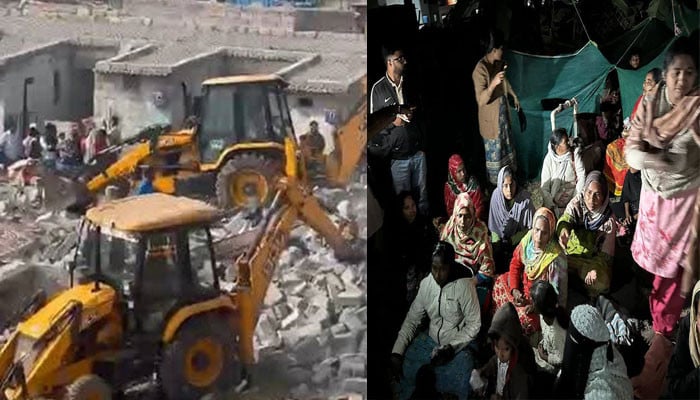
Bengaluru, India – In a shocking turn of events, the Indian government has demolished over 200 homes in the city of Bengaluru, leaving hundreds of Muslim families without a place to call home. The demolition, which took place on December 22, was carried out by the state government in association with the Bengaluru Solid Waste Management Limited.
According to eyewitnesses, the demolition was sudden and unannounced, with residents being forcibly evicted and left to spend the night on the streets or in temporary shelters. Many of the residents affected by the demolition are migrant laborers, who have been living in the area for over two decades.
The Indian government claims that the homes were built on government land near a lake, without proper authorization. However, residents dispute this claim, stating that they have lived in the area for years and have all necessary documents, including Aadhar cards and voter IDs.
The situation has sparked widespread outrage, with many questioning the government’s motives and the manner in which the demolition was carried out. The Indian media has reported that several people, including an MLA, a journalist, a student, a lawyer, and a retired teacher, have been arrested in connection with the demolition.
The government’s actions have been widely criticized, with many accusing them of targeting Muslim residents. The incident has also raised concerns about the rights of marginalized communities and the need for proper compensation and rehabilitation.
The Bengaluru demolition is the latest in a series of incidents that have highlighted the plight of Muslims in India. The Indian government’s actions have been seen as a attempt to intimidate and marginalize the Muslim community, and have sparked widespread condemnation from human rights groups and international organizations.
As the situation continues to unfold, residents are calling for justice and an end to the government’s discriminatory policies. The Bengaluru demolition is a stark reminder of the need for accountability and transparency in governance, and the importance of protecting the rights of all citizens, regardless of their faith or background.
