

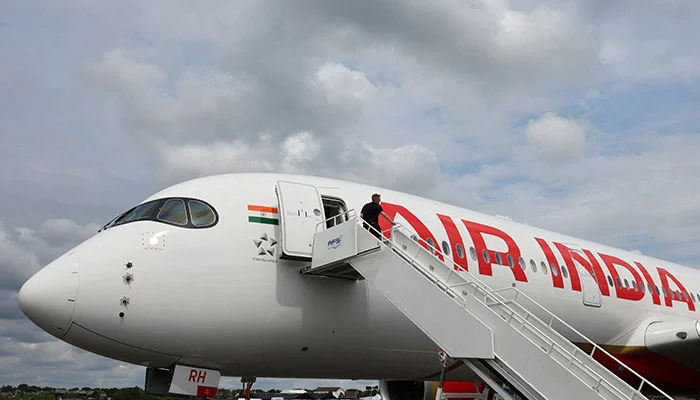
India’s aviation watchdog, the Directorate General of Civil Aviation (DGCA), identified 51 safety lapses at Air India in its July audit, according to a government report seen by Reuters on Tuesday. These deficiencies include inadequate training for some pilots, the use of unapproved simulators, and a substandard rostering system.
While this annual audit was not directly linked to the tragic Boeing 787 crash last month in Ahmedabad, which killed 260 people, its findings emerge as the airline faces intensified scrutiny following the accident.
The Tata Group-owned airline is already under pressure, having received warning notices for operating aircraft without verifying emergency equipment, failing to replace engine parts promptly, and forging records, in addition to other issues related to crew fatigue management.
The confidential, 11-page audit report from the DGCA highlighted seven “Level I” significant breaches requiring rectification by July 30, and 44 other non-compliances that must be resolved by August 23.
Officials reported finding “recurrent training gaps” for certain unspecified Boeing 787 and 777 pilots. These pilots had reportedly not completed their monitoring duties—where they observe cockpit instrument function without actively flying—prior to mandatory periodic evaluations. Air India’s fleet, according to Flightradar24, includes 34 Boeing 787s and 23 Boeing 777s.
The audit report also flagged operational and safety risks, stating that Air India did not conduct “proper route assessments” for some “Category C” airports, which can have challenging layouts or terrain. Furthermore, it noted that training for such airfields was conducted using simulators that did not meet qualification standards. The DGCA audit report warned that this “may account to non-consideration of safety risks during approaches to challenging airports.”
In a statement to Reuters, Air India affirmed its “full transparency” during the audit and stated it would “submit our response to the regulator within the stipulated time frame, along with the details of the corrective actions.”
A preliminary report into the June crash indicated that fuel control switches were flipped almost simultaneously after takeoff, leading to pilot confusion in the cockpit. One pilot reportedly questioned the other about cutting off the fuel, to which the other denied doing so.
The DGCA has frequently raised concerns about Air India pilots exceeding their flight-duty periods. The audit report cited an AI-787 Milan-New Delhi flight last month that exceeded its limit by 2 hours and 18 minutes, classifying it as a “Level I” non-compliance. The audit was conducted by 10 DGCA inspectors and included four additional auditors.
The report also criticized the airline’s rostering system, stating it “doesn’t give a hard alert” if a minimum number of crew members were not being deployed on a flight. It further noted that at least four international flights had operated with insufficient cabin crew.
Tata acquired Air India from the government in 2022. Despite aggressively expanding its international network, the airline faces persistent passenger complaints, often voiced on social media, detailing soiled seats, broken armrests, non-operational entertainment systems, and dirty cabin areas.
Reuters previously reported last week that Air India’s senior executives, including the airline’s director of flight operations and its director of training, received notices on July 23 flagging 29 “systemic” lapses and admonishing the airline for ignoring “repeated” warnings. Air India has stated it will respond to the regulator.
The audit report specifically noted inconsistencies in “door checks and equipment checks” procedures and gaps in training documentation. Additionally, it highlighted that no chief pilots were assigned for the Airbus AIR.PA A320 and A350 fleet, concluding that this “results in a lack of accountability, and effective monitoring of flight operations for these aircraft types.”
Last year, authorities issued warnings or fines to airlines in 23 instances for safety violations, with 11 of these involving the Air India Group. The largest fine, $127,000, was imposed on Air India for “insufficient oxygen on board” during some international flights.
