

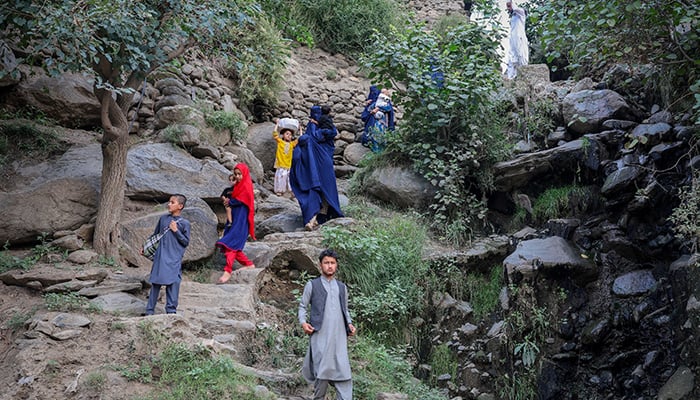
The death toll from the earthquake in Afghanistan, the worst in the region in years, has surged to 1,411, the Taliban administration’s spokesperson said on Tuesday. The group also reported that at least 3,251 people have been injured and more than 8,000 houses have been destroyed in the disaster.
Rescuers are now attempting to reach isolated villages in the eastern region of Kunar, the epicenter of the earthquake, which is one of the deadliest seismic events the nation has witnessed. Ehsanullah Ehsan, the provincial head of disaster management, said that while rescue operations were conducted in four villages in Kunar after the quake, efforts will now focus on reaching more remote mountain areas. “We cannot accurately predict how many bodies might still be trapped under the rubble,” said Ehsan. “Our effort is to complete these operations as soon as possible and to begin distributing aid to the affected families.”
The magnitude 6.0 earthquake struck around midnight local time on Monday at a shallow depth of 10 km (6 miles), killing 812 people in the eastern provinces of Kunar and Nangarhar. Mountainous terrain and inclement weather have hindered rescuers from reaching remote areas along the Pakistani border where the quake flattened mudbrick homes. Ehsan said that gaining access for vehicles on the narrow mountain roads was the main obstacle for relief work, adding that machinery was being brought in to clear roads of debris. According to a Reuters witness, a line of ambulances was on the damaged mountain road trying to reach Kunar villages, as helicopters flew in, bringing aid supplies and taking the injured to hospitals. Some of those injured have been transferred to hospitals in Kabul and the adjacent province of Nangarhar, said Ehsan.
Taliban soldiers were deployed in the area, providing help and security. The disaster has further strained the war-torn nation’s Taliban administration, which is already grappling with a sharp drop in foreign aid and the deportations of hundreds of thousands of Afghans by neighboring countries. “National and international organizations are present in the area, have organized their assistance, and, God willing, aid will be distributed in an orderly manner,” said Ehsan.
A UN official said on Monday that rescue teams and authorities are trying to quickly dispose of animal carcasses to minimize the risk of water contamination. “Damaged roads, ongoing aftershocks, and remote locations of many villages severely impede the delivery of aid,” the World Health Organisation said in a situation update, adding that over 12,000 people had been affected by the quake. “The pre-earthquake fragility of the health system means local capacity is overwhelmed, creating total dependence on external actors,” the update stated. Afghanistan is prone to deadly earthquakes, particularly in the Hindu Kush mountain range, where the Indian and Eurasian tectonic plates meet. A magnitude 6.1 earthquake that killed 1,000 people in the eastern region in 2022 was the first major natural disaster faced by the Taliban government.
