

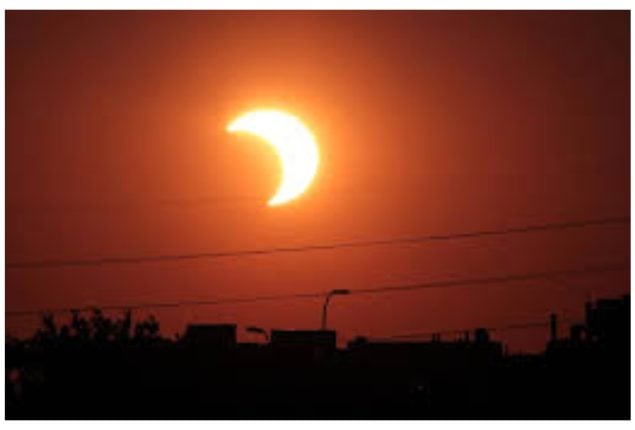
A spectacular celestial event is on the horizon as a partial solar eclipse is scheduled for Saturday, September 21, 2025. For millions of skywatchers across the South Pacific, including New Zealand, parts of Antarctica, and various Pacific islands, the Moon will appear to take a dramatic “bite” out of the Sun in a mesmerizing natural display.
What Is a Partial Solar Eclipse?
A partial solar eclipse occurs when the Moon moves between the Earth and the Sun, partially covering the Sun’s disk. Unlike a total eclipse, the Moon does not completely obscure the Sun, but the visual effect is still stunning—resembling a celestial crescent slowly forming and dissolving in the sky.
Where and When to Watch?
The eclipse will begin at 1:29 p.m. ET (1729 GMT) and reach its maximum obscuration at 7:41 p.m. UTC (3:41 p.m. ET).
Those in southern New Zealand, Antarctica, and nearby Pacific islands will have the best views, with up to 70% of the Sun obscured at the peak of the eclipse. According to Time and Date, an estimated 16.6 million people will be able to witness at least some portion of the eclipse in person.
Unfortunately, a large part of the world, including North and South America, will not have a direct view of this event.
Watch Online from Anywhere:
For those outside the eclipse path, there is still an opportunity to witness the spectacle. Space.com will be hosting a live streaming event, allowing global viewers to follow along with expert commentary and real-time visuals.
Safety First: Protect Your Eyes:
Watching a solar eclipse requires specific safety measures. Never look directly at the Sun without certified solar viewing glasses or eclipse viewers, as doing so can cause permanent eye damage or blindness. Standard sunglasses are not safe for viewing an eclipse.
Photographers and enthusiasts are also advised to consult proper guidelines on solar photography techniques to protect both their vision and camera equipment.
