

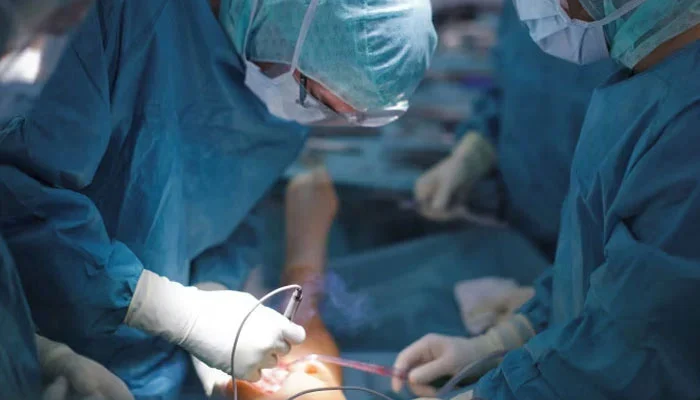
Karachi: In an act of immense fortitude amidst unimaginable sorrow, a female nephrologist from Karachi made the courageous decision to donate both kidneys of her only 23-year-old son, who was declared brain dead following a devastating road accident. This selfless act, reported by The News on Thursday, directly saved the lives of two patients awaiting transplants.
The deceased, Syed Sultan Zafar, aged 23, was a dental student at Ziauddin Medical and Dental College and the sole son of Dr. Mahar Afroze, a Consultant Nephrologist and Associate Professor at the Sindh Institute of Urology and Transplantation (SIUT). He was also the grandson of two highly esteemed Pakistani health experts: Professor Tipu Sultan and Professor Dr. Shershah Syed.
According to Professor Tipu, Sultan Zafar’s father, Syed Furqan Zafar, had passed away a few years prior due to liver cancer and is interred in Kohi Goth, where the family operates a charity hospital. Sultan Zafar will now be laid to rest beside his father.
The Tragic Ordeal and Selfless Decision
Professor Tipu Sultan recounted the harrowing experience, stating that Sultan Zafar was involved in a fatal road accident last Wednesday morning while driving with friends in a private housing society in Karachi. “He was rushed to the emergency room with multiple head injuries and was unconscious upon arrival. He was intubated immediately and shifted to the ICU after initial surgery to remove blood clots from his brain,” Professor Tipu explained. He further added, “At 1 AM on Saturday, Sultan was again taken to the operating theatre for another craniotomy. We spent those days in constant fear and anguish, unable to sleep or focus on anything but his condition.”
Initially, Sultan Zafar showed signs of improvement and was moved to a ward for nursing care. However, on Tuesday morning, his condition suddenly deteriorated. “He developed breathing difficulties and was shifted back to the ICU. He was re-intubated, but by 4 PM, he had lost all reflexes, and his pupils were fixed and dilated,” Professor Tipu recalled.
The family was devastated. “There are no words to describe what we went through. After prolonged discussions outside the ICU lasting more than five hours, Mahar Afroze took the most selfless and courageous decision of her life — to donate her son’s organs so others could live,” Professor Tipu shared, his voice filled with emotion.
Dr. Afroze personally oversaw the transportation of her son’s body by ambulance to SIUT late Tuesday night, fully aware of the critical importance of cadaveric organ donation. “She is a nephrologist who sees patients die daily due to the shortage of organ donors. She wanted Zafar’s death to save lives,” Professor Tipu emphasized.
Successful Transplants and A Call for Emulation
At SIUT, both of Sultan Zafar’s kidneys were successfully transplanted into two patients who had been on the waiting list for years. Unfortunately, other organs could not be harvested as no immediate recipients were available.
Professor Dr. Shershah Syed, Sultan Zafar’s grandfather, offered an emotional tribute to his daughter-in-law. “Dr. Mahar Afroze is a great doctor, a real human being, and a courageous mother. She has set an example for every family and doctor in Pakistan. We are all very proud of her,” he stated.
In a statement issued on Wednesday, SIUT confirmed the successful transplantations, noting that the surgeries were performed in the early hours of the morning by a dedicated team of urologists and anaesthetists. The statement read, “This generous donation of Dr. Afroze in an hour of profound grief and distress is widely hailed by the members of the medical profession and the society at large.”
SIUT Director Professor Adib Rizvi lauded the family’s decision. “They gave the gift of life to two patients who had no donors in their families and were on dialysis for years. We call upon society to emulate this noble act,” he urged.
Pakistan faces a severe shortage of organ donors. Cultural misconceptions and religious concerns often deter families from consenting to organ donation from deceased loved ones, despite thousands of patients dying each year from organ failure.
“This act should inspire others,” Professor Tipu Sultan implored, adding, “Mahar Afroze has lost her only son and now has only her two daughters left, yet she chose to give hope to others. That is true humanity.”
As Sultan Zafar is laid to rest beside his father in Kohi Goth, his mother’s strength in the face of an unbearable tragedy stands as a beacon of hope for the thousands of patients in Pakistan desperately waiting for organ transplants.
