

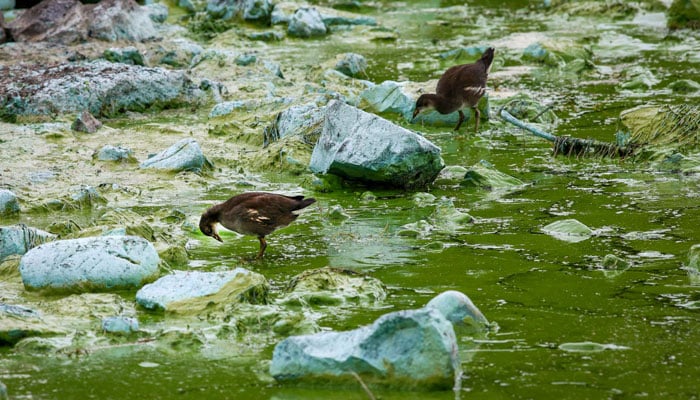
For the third consecutive year, toxic blue-green algae blooms, described as looking like pea soup and smelling like rotten eggs, have overtaken Lough Neagh, the largest lake in the UK and Ireland. According to locals, this summer’s bloom is the worst it has ever been, so widespread that it is visible from space.
A Dying Lake: Voices from the Community
“The lake is dying,” Mary O’Hagan, an open-water swimmer, told AFP at Ballyronan, on the lake’s western shore. Ducks nearby were struggling to get over the algae-slicked stones. According to experts, the algae growth—fueled by industrial, agricultural, and sewage pollution, as well as climate change—has devastated fishing and water sports and raised serious concerns about the safety of drinking water.
Signs prohibiting swimming are posted along the lake’s 78-mile shoreline. Nutrient-rich runoff from farms that supply large corporations like the poultry processor Moy Park is being blamed for contributing to the pollution. Untreated sewage spills and septic tank effluent are also suspected. Moy Park denies polluting the lake, stating that its poultry sector is “highly regulated” and that the algae issue is a “complex issue not specifically linked to any one sector.”
The Human and Economic Toll
For 48-year-old O’Hagan, the lake was her “training ground” during the Covid years, but she has barely set foot in it since. Suffering from chronic health problems, she says swimming is her only form of exercise, and now she must rely on local swimming pools. “Swimming here with its spectacular sunrises helped me when I was in a bad place in my life. It’s heartbreaking to see it now,” she said. O’Hagan has joined the “Save Lough Neagh” campaign, recently urging Northern Ireland’s government to act faster. “Fine the polluters!” she demanded, also calling for an independent environmental agency to punish guilty companies.
The invasive zebra mussel species, a recent arrival, has worsened the problem by stimulating algal photosynthesis. The algae has also decimated the Lough Neagh fly, a key food source for fish and birds, according to local fisherman Mick Hagan. “This river used to be full of trout, but no longer,” he said. Europe’s largest eel fishery on the lough also suspended operations this year due to quality concerns. Hagan, whose family has fished for eels for generations, now runs a pizza truck, but the overwhelming stench from the lake kept most tourists away this summer.
Government Inaction and a Potential Catalyst
Gavin Knox, whose small paddleboard business also fell victim to the sludge, said the foul smell can be felt miles inland. Knox, who started his business in 2022 to help people enjoy the water safely, saw bookings disappear after the algae appeared. “Doing business became impossible,” he said, adding that no one wants to paddle “when the fish are dying and the birds are covered in green slime.” Knox is angry that no compensation has been offered to affected small businesses by the government.
Last July, the regional government launched an action plan, but less than half of the planned measures have been completed. A government statement noted that the remaining steps have “delivery timelines extending into 2026 and beyond.” Les Gornall, a local slurry expert nicknamed “Doctor Sludge,” believes a health emergency might force swifter action. Since Lough Neagh supplies about 40% of Northern Ireland’s drinking water, a contamination crisis could cause a “property and tourism crash,” he predicted. “Maybe that prospect will jolt them into fixing the lake.”
