

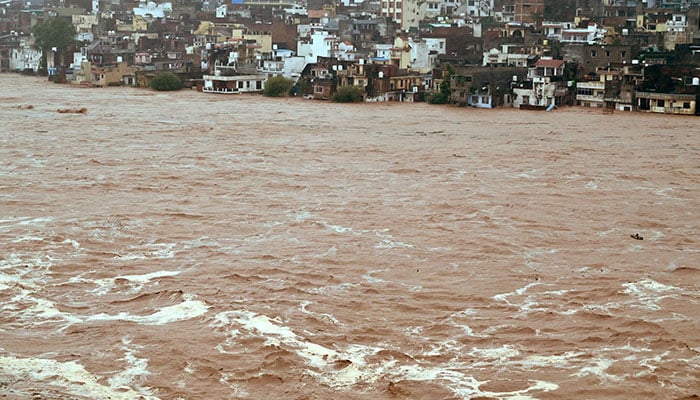
In occupied Jammu, a heavy rain-triggered landslide on a famous Hindu pilgrimage route has killed at least 30 people, with floods prompting officials to issue warnings for people to stay indoors at night. Following the incident, the chief minister of the occupied territory, Omar Abdullah, said that communication was “almost nonexistent.”
Situation in Occupied Jammu
- Landslide and Flooding: The landslide occurred near the Vaishno Devi shrine, leading to 30 confirmed deaths. This is the latest calamity from the monsoon downpours, which have already killed 60 people and left 200 missing in Kishtwar just last week.
- Infrastructure Damage: The city of Jammu recorded 368mm of rain in one day, causing the Tawi, Chenab, and Basantar rivers to overflow. A bridge collapse on the Tawi river caused vehicles to fall into a large hole, and several highways connecting Jammu to the rest of India were also damaged.
- Precautionary Measures: Authorities have ordered the closure of educational institutions in Jammu and have advised people to stay indoors at night due to the flood threat.
Flood Threat in Punjab, Pakistan
Meanwhile, Pakistan had already announced that its eastern province of Punjab was facing a “very high to exceptionally high” flood threat due to a combination of heavy rains and India’s decision to release water from two dams.
- River Surges: The release of additional water from India into the Ravi and Chenab rivers has caused water levels in the Ravi, Chenab, and Sutlej to rise to dangerous levels.
- Army Assistance: The Punjab government has called in the army to assist civil authorities in six districts, including Lahore, Kasur, Sialkot, Faisalabad, Narowal, and Okara. These districts had requested immediate military support for ongoing rescue operations and to protect lives.
- Evacuations: Following flood warnings, over 150,000 people have been displaced in Punjab, including nearly 35,000 who voluntarily evacuated from flood-prone areas.
