

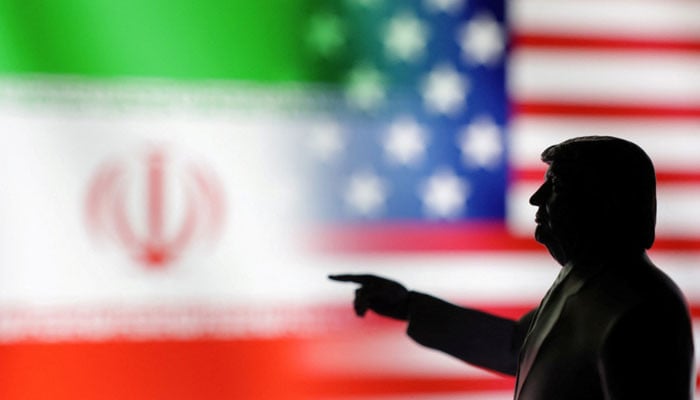
The US Department of the Treasury has announced new sanctions against Iran, further escalating tensions in the region. According to a news agency report, the US has imposed new sanctions on Iran under its counter-terrorism laws, targeting several individuals and ships. The US Department of the Treasury’s website states that the new sanctions include three individuals, 17 entities, and nine ships. The United Nations has warned of a potential global food crisis due to the blockade of the Strait of Hormuz.
Maximo Torero, chief economist for the Food and Agriculture Organization (FAO) of the United Nations, said that time is rapidly running out. US President Donald Trump has called for a ceasefire in Lebanon, with Israeli Prime Minister Benjamin Netanyahu scheduled to meet with Lebanese President Michel Aoun in Washington, D.C. on Monday. The US Navy has announced that it will conduct open-sea searches for ships headed to Iran.
A heartwarming story in China has gone viral on social media, with a single mother’s struggles to raise her children and educate them by carrying heavy cement bags on construction sites for the past 16 years. Pope Francis, the spiritual leader of the Catholic Church, has expressed his concern about the world’s suffering under the hands of a few tyrannical rulers.
Multiple villages and towns in Lebanon have been severely damaged by Israeli airstrikes, with over 1,400 buildings destroyed since March 2, according to British media reports. US President Donald Trump has praised Pakistan’s leadership for playing a positive role in reducing tensions in the region. Russian Foreign Minister Sergey Lavrov has advised the US to engage in dialogue with governments it dislikes before imposing sanctions.
US Defense Secretary Mark Esper has said that the US knows about Iran’s military movements, and that the situation is getting increasingly complex. Former Iranian ambassador to the United Nations, Majid Takht Ravanchi, has expressed his concerns about the escalating tensions between the US and Iran, and the potential consequences for the region. The Iranian government has denied allegations of involvement in the downing of a Ukrainian plane, saying that it was a “human error” on the part of the Iranian military.
In other news, a new threat has emerged in the ongoing tensions between the US and Iran, with reports suggesting that Iran may receive over 1,000 “man-pad” missiles from China, which could potentially be used against US and Israeli targets. Iranian President Hassan Rouhani has denied allegations of involvement in the attacks on US and Saudi oil facilities, saying that Iran is not seeking to dominate the region but rather protect its sovereignty.
In a surprise move, the US and Lebanon have announced plans to hold talks in Washington, D.C. on Monday, with Israeli Prime Minister Benjamin Netanyahu scheduled to meet with Lebanese President Michel Aoun. The talks are seen as a positive step towards reducing tensions in the region.
As the world waits with bated breath for the outcome of these talks, one thing is clear: the situation in the Middle East is increasingly complex and fragile, with multiple stakeholders vying for power and influence. The US, Iran, and their allies are locked in a tense standoff, with the potential for conflict escalating by the day.
In the meantime, the people of Lebanon are suffering the consequences of the ongoing conflict, with multiple villages and towns destroyed and thousands of people displaced. The international community must come together to find a peaceful solution to this crisis, and prevent further suffering and loss of life.
