

Article:
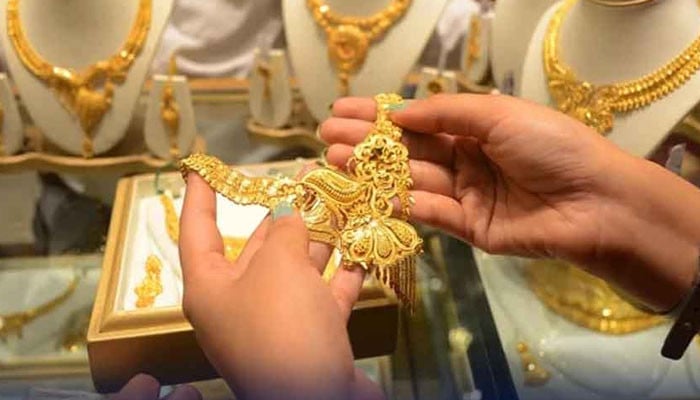
Pakistan’s currency market has seen a significant surge in gold prices, sparking concerns among consumers and businesses alike. According to the All Pakistan Sarraf Association, the price of gold per tola has increased by Rs. 3,400, reaching Rs. 489,362. This sudden hike has been attributed to the ongoing conflict in the Middle East, which has led to a decline in global trade and an increase in the cost of imports.
The price of 10 grams of gold has also seen a significant increase, reaching Rs. 420,406, up from Rs. 217,491. This has led to a sharp rise in the cost of gold jewelry and other gold-based products.
The Pakistani government has imposed restrictions on the sale of liquefied petroleum gas (LPG) to prevent hoarding and price gouging. However, consumers claim that LPG is being sold at a premium of Rs. 200 per kilogram, with prices reaching as high as Rs. 530 per kilogram in some areas.
The Pakistan Stock Exchange (PSX) saw a decline of 1,308 points in the last trading week, with the 100-index closing at 150,398. The vice chairman of the All Pakistan Petrol Pump Association, Naeem Baig, has expressed concerns about the rising prices of petroleum products.
The State Bank of Pakistan has launched a new initiative to promote financial literacy among young people, with the aim of making them more financially secure. The bank has also announced a range of measures to support businesses and individuals affected by the economic downturn.
The ongoing conflict in the Middle East has led to a significant increase in the global cost of oil, with many countries experiencing severe economic hardship. The Economist magazine has published a list of countries that are likely to be severely affected by the oil crisis, including Pakistan.
Meanwhile, Iranian officials have responded sharply to US President Donald Trump’s threats, calling his language “ghastly” and an insult to the Iranian people. The Iranian government has also announced that it will cooperate with Pakistani authorities in the upcoming trial of former Prime Minister Imran Khan.
As the global economy continues to grapple with the impact of the conflict in the Middle East, Pakistan is facing significant challenges in maintaining economic stability. The government has announced a range of measures to support businesses and individuals affected by the economic downturn, but it remains to be seen whether these efforts will be enough to mitigate the effects of the crisis.
In related news, the UAE has reported a decline in air travel due to the conflict in the Middle East, with many airlines increasing their prices in response to the growing demand for air travel.
The Iranian government has also announced that it will cooperate with Pakistani authorities in the upcoming trial of former Prime Minister Imran Khan, who is accused of corruption and other crimes. The trial is expected to be a significant test of Pakistan’s judicial system and its ability to hold those in power accountable.
As the global economy continues to face significant challenges, Pakistan is facing a perfect storm of economic and political instability. The government has announced a range of measures to support businesses and individuals affected by the economic downturn, but it remains to be seen whether these efforts will be enough to mitigate the effects of the crisis.
The ongoing conflict in the Middle East has led to a significant increase in the global cost of oil, with many countries experiencing severe economic hardship. The Pakistani government has announced a range of measures to support businesses and individuals affected by the economic downturn, but it remains to be seen whether these efforts will be enough to mitigate the effects of the crisis.
In conclusion, Pakistan’s currency market is facing significant challenges due to the ongoing conflict in the Middle East. The government has announced a range of measures to support businesses and individuals affected by the economic downturn, but it remains to be seen whether these efforts will be enough to mitigate the effects of the crisis.
