

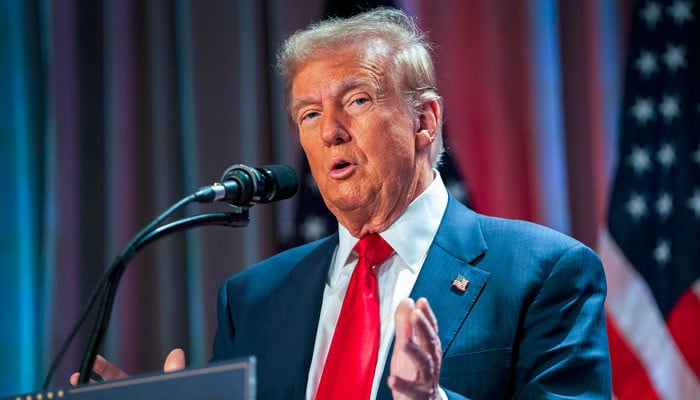
Iran is on high alert as US President Donald Trump is set to address the nation, providing crucial updates on the ongoing conflict. According to White House officials, Trump will discuss Iran’s war, which has been a pressing concern for global leaders.
The address will take place on Thursday morning at 6 am, according to Pakistan time. Trump’s statements come after he announced that the US will exit the conflict with Iran within two to three weeks. However, he emphasized that the US may negotiate a deal with Iran before withdrawing.
The US and Israel have accused Iran of attacking the Pasteur Institute in Tehran, killing the wife of Dr. Kamal Kharazi, a former Iranian diplomat. Dr. Kharazi was severely injured and is in a coma.
China has warned that if the conflict continues, the Strait of Hormuz will remain closed, affecting global trade. Austria has denied the US request to use its airspace for attacking Iran.
Congresswoman Yasmine Ansari has condemned the US threat to send Iran back to the Stone Age as “hateful and terrifying.”
Irranian Foreign Minister Seyed Abbas Araghchi has called the US-Israeli attack on the Pasteur Institute a “shameful act.”
A new pipeline project in the Strait of Hormuz aims to bypass the chokepoint, which is under Iranian control.
Amir Hataemi, a high-ranking Iranian official, has warned that any country attacking Iran will be completely destroyed.
The conflict in the Middle East will continue until the US is forced to surrender and disarm, according to Iranian officials.
Iran’s Supreme Leader Ali Khamenei has been reported safe from the US-Israeli airstrikes, which have not caused any harm to him.
A new metro and airport project in Mecca aims to provide better travel facilities to millions of pilgrims and Saudi citizens.
Media reports suggest that negotiations are underway for a possible ceasefire agreement between the US and Iran, which could see Iran reopen the Strait of Hormuz in exchange for a ceasefire.
The closure of the Strait of Hormuz has significantly increased global trade costs due to the ongoing conflict in the Middle East.
