

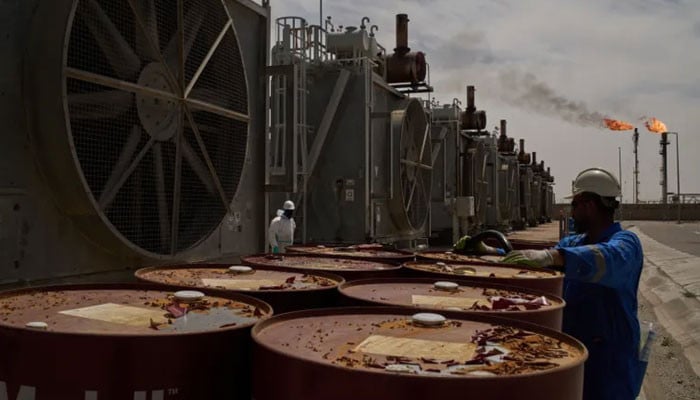
The global oil market has witnessed a sharp increase in prices, with Brent crude oil reaching $116 per barrel, a level not seen in nearly two weeks. The surge in prices comes as tensions between Iran and the US escalate, with Iran’s parliament speaker warning that the country will respond strongly to any US military presence in the region. The US has also accused Iran of launching missile attacks on Israel, while Iran has denied the allegations.
The price hike is a result of the ongoing conflict between Iran and the US, which has led to a significant increase in oil prices. The conflict has also affected global financial markets, with major stock exchanges in Asia experiencing significant drops. The Nikkei 225 in Japan and the KOSPI in South Korea have both fallen by over 4%.
The situation has been further exacerbated by Iran’s blockade of the Strait of Hormuz, which has affected nearly a fifth of global oil supplies. The Strait of Hormuz is a critical waterway that connects the Persian Gulf to the Gulf of Oman and is used by oil tankers to transport crude oil to refineries around the world.
The US has warned Iran that it will take action to destroy Iran’s oil infrastructure if the country does not open the Strait of Hormuz by April 6. The US has also proposed a 15-point plan to end the conflict, but Iran has rejected the proposal and demanded that the US withdraw its forces from the region.
The situation is becoming increasingly volatile, with experts warning that oil prices could reach $120 per barrel or higher if the conflict continues. The EU has also called for calm, with European Council President Antonio Costa expressing his support for Pakistan’s diplomatic efforts to resolve the crisis.
The conflict has also had a significant impact on the global economy, with many countries experiencing significant increases in fuel prices. The US has warned that the conflict could have far-reaching consequences for the global economy, and experts are calling for calm and restraint to avoid a wider conflict.
In related news, the US has accused Iran of launching over 5,200 attacks on Gulf countries over the past 30 days. The US has also warned that it will take action to destroy Iran’s oil infrastructure if the country does not open the Strait of Hormuz by April 6.
The conflict has also had a significant impact on global financial markets, with many countries experiencing significant drops in their stock markets. The US has warned that the conflict could have far-reaching consequences for the global economy, and experts are calling for calm and restraint to avoid a wider conflict.
In a separate development, the US has warned that it will take action to destroy Iran’s oil infrastructure if the country does not open the Strait of Hormuz by April 6. The US has also proposed a 15-point plan to end the conflict, but Iran has rejected the proposal and demanded that the US withdraw its forces from the region.
The situation is becoming increasingly volatile, with experts warning that oil prices could reach $120 per barrel or higher if the conflict continues. The EU has also called for calm, with European Council President Antonio Costa expressing his support for Pakistan’s diplomatic efforts to resolve the crisis.
In related news, the US has accused Iran of launching over 5,200 attacks on Gulf countries over the past 30 days. The US has also warned that it will take action to destroy Iran’s oil infrastructure if the country does not open the Strait of Hormuz by April 6.
The conflict has also had a significant impact on the global economy, with many countries experiencing significant increases in fuel prices. The US has warned that the conflict could have far-reaching consequences for the global economy, and experts are calling for calm and restraint to avoid a wider conflict.
In a separate development, the US has warned that it will take action to destroy Iran’s oil infrastructure if the country does not open the Strait of Hormuz by April 6. The US has also proposed a 15-point plan to end the conflict, but Iran has rejected the proposal and demanded that the US withdraw its forces from the region.
The situation is becoming increasingly volatile, with experts warning that oil prices could reach $120 per barrel or higher if the conflict continues. The EU has also called for calm, with European Council President Antonio Costa expressing his support for Pakistan’s diplomatic efforts to resolve the crisis.
In related news, the US has accused Iran of launching over 5,200
