

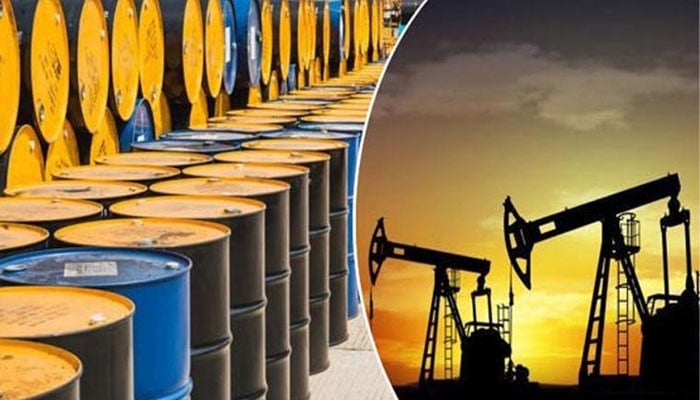
The global oil market is experiencing a significant surge in prices, with the US crude oil price increasing to over $100 per barrel. The Brent crude oil price has also risen to $113 per barrel, causing a ripple effect on the global economy. In Pakistan, the petroleum levy on high-speed diesel (HSD) has been increased to Rs. 305.37 per liter, up from Rs. 105.37 per liter previously.
The global gold market is also witnessing a significant increase in prices, with the gold rate rising to $4,413 per ounce. The US trade deficit has widened due to the ongoing conflict in the Middle East, which has led to a surge in oil prices. The global economy is bracing for a new wave of inflation as a result of the rising oil prices.
The Pakistani rupee has depreciated against the US dollar, making imports more expensive. The country’s trade deficit is expected to widen further, putting pressure on the government to intervene. The increase in oil prices is also expected to have a ripple effect on the country’s economy, leading to higher inflation and reduced consumer spending.
The global market is closely watching the developments in the Middle East, where the conflict between Iran and Israel is escalating. The US has imposed sanctions on Iran, which has led to a surge in oil prices. The global economy is facing a new wave of uncertainty, and the impact of the conflict on the global oil market will be closely watched.
The Pakistani government has announced a new strategy to reduce the country’s reliance on imported oil. The government plans to increase the production of domestic oil and gas, which will help reduce the country’s dependence on imported oil. The government also plans to increase the use of alternative energy sources, such as solar and wind power.
The global economy is facing a new wave of challenges, and the impact of the conflict in the Middle East will be closely watched. The rise in oil prices is expected to have a significant impact on the global economy, and governments around the world are taking steps to mitigate the impact.
In related news, the US has imposed sanctions on Iran, which has led to a surge in oil prices. The global market is closely watching the developments in the Middle East, where the conflict between Iran and Israel is escalating. The US has also announced that it will be working with its allies to reduce the tensions in the region.
The Pakistani government has announced that it will be increasing the production of domestic oil and gas, which will help reduce the country’s dependence on imported oil. The government also plans to increase the use of alternative energy sources, such as solar and wind power.
The global economy is facing a new wave of challenges, and the impact of the conflict in the Middle East will be closely watched. The rise in oil prices is expected to have a significant impact on the global economy, and governments around the world are taking steps to mitigate the impact.
The US has imposed sanctions on Iran, which has led to a surge in oil prices. The global market is closely watching the developments in the Middle East, where the conflict between Iran and Israel is escalating. The US has also announced that it will be working with its allies to reduce the tensions in the region.
The Pakistani government has announced that it will be working with its allies to reduce the tensions in the region. The government also plans to increase the production of domestic oil and gas, which will help reduce the country’s dependence on imported oil. The government also plans to increase the use of alternative energy sources, such as solar and wind power.
The global economy is facing a new wave of challenges, and the impact of the conflict in the Middle East will be closely watched. The rise in oil prices is expected to have a significant impact on the global economy, and governments around the world are taking steps to mitigate the impact.
