

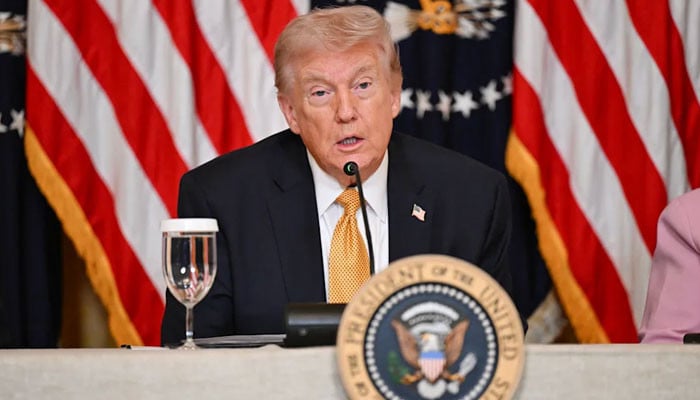
The debate surrounding US President Donald Trump’s claim that he predicted the 9/11 attacks has reignited amidst the ongoing tensions in the Middle East. However, available evidence does not fully confirm this claim. Trump has cited his 2000 book, “The America We Deserve,” as proof of his stance. The book, written about a year before the 9/11 attacks, mentions Osama bin Laden as a potential threat but only in the context of the US sometimes focusing on one enemy before shifting attention to a new crisis. Trump also wrote in the book about the possibility of a major terrorist attack on the US, which could be more devastating than the 1993 World Trade Center bombing. However, the threat he mentioned was related to the use of nuclear or biological weapons, not hijacking.
Experts point out that the book does not mention hijacking, targeting the World Trade Center, or predicting specific events like the 9/11 attacks. The US authorities have stated that the Cuban president’s resignation is a key condition for lifting energy sanctions. The 9/11 attacks, which were among the deadliest terrorist attacks in modern history, resulted in the deaths of nearly 3,000 people. Nineteen al-Qaeda operatives hijacked four commercial airplanes, with two crashing into the World Trade Center in New York, one into the Pentagon, and the fourth crashing in Pennsylvania.
In response to the attacks, the US launched a war in Afghanistan, and significant changes were made to counter-terrorism policies worldwide. A joint statement was issued stating that the attacks on the United Arab Emirates were against independence and international law. In a separate incident, 101 passengers, including pets, arrived at Athens Airport in Greece. Youssef al-Otaiba stated that the US and UAE would continue to collaborate and invest in each other’s economies.
Natananyahu’s aim is to block all avenues for Trump to negotiate a ceasefire and subsequent talks with Iran. Eliyahu Magna Mae has approved the sale of a modern defense system to the UAE, worth approximately $4.5 billion, which includes advanced long-range radar systems. Bader al-Badisi stated that Iran’s war is a catastrophic and enormous mistake, as it came hours after a few encouraging hours of dialogue between the US and Iran. Saad Al-Kaabi said that the Iranian attacks affected the facilities from which 17% of the country’s exportable LPG was produced.
During a meeting with the Japanese prime minister, a journalist asked why Japan was not given prior warning of the attack. Trump replied that they did not want to give too many signals, and they took an unexpected and strong action. The Kuwait Petroleum Corporation stated that one operational unit in the Mina Abdullah and Mina Al-Ahmadi refineries was targeted by a drone attack, resulting in limited fire.
A joint statement by the UK, France, Germany, Italy, the Netherlands, and Japan expressed their commitment to maintaining the stability of the energy markets and offering assistance in the Strait of Hormuz. The Iranian Revolutionary Guard Corps claimed that the Israeli city of Haifa’s power plant was targeted, resulting in power outages in various areas of the city. Captain Hakens stated that the plane landed safely, and the pilot’s condition is stable, with investigations ongoing.
A record increase in gas prices was observed in the UK and Europe, with reports from London suggesting that the conflict has exacerbated the energy crisis. The Iranian media claimed that the Israeli military’s communication systems have significant security vulnerabilities, which have led to a crisis in the management of wartime strategies. The Bangladesh Ramadan Moon Sighting Committee stated that the Shawwal moon was not sighted in Bangladesh, and Eid al-Fitr will be celebrated on March 21. Natananyahu’s aim is to block all avenues for Trump to negotiate a ceasefire and subsequent talks with Iran.
