

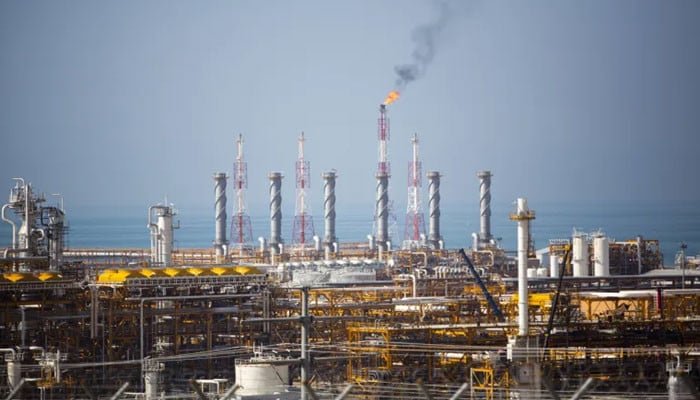
The global oil market has seen a sharp increase in prices following the Israeli strikes on Iran’s South Pars gas field, a development that has raised concerns about a new wave of inflation worldwide. According to a report by Arab media, the price of Brent crude oil, a globally traded benchmark, has surged by nearly 5% to surpass $108 per barrel. The price of US West Texas Intermediate crude has also seen a significant increase.
The South Pars gas field, the world’s largest gas reserve, was targeted by Israeli airstrikes, prompting Iran’s Revolutionary Guard to threaten attacks on oil and gas installations in Gulf countries. US President Trump warned that if Qatar were to be targeted, the US would not hesitate to destroy the South Pars gas field. Iran subsequently launched a missile attack on Qatar’s Ras Laffan gas complex, resulting in significant damage and disruption.
The ongoing conflict has severely impacted oil and liquefied natural gas (LNG) shipments through the Strait of Hormuz, a critical waterway that accounts for nearly 20% of the world’s oil supply. The disruption has created uncertainty in the global market, prompting energy experts to warn of potential long-term consequences, including economic slowdown and inflation.
In an attempt to mitigate the impact, the US has temporarily relaxed shipping regulations and allowed limited trade with Venezuela’s state-owned oil company. Meanwhile, the UAE has announced plans to sell a $4.5 billion advanced defense system to the US, which includes a long-range radar system. The system is designed to enhance the UAE’s security capabilities and strengthen its defense against potential threats.
The conflict has also raised concerns about the impact on global energy markets. Oil prices have surged to record highs in the UK and Europe, exacerbating the energy crisis. Iranian media has reported that Israeli military communications systems have been compromised, leading to a crisis in the management of military operations.
In a joint statement, the UK, France, Germany, Italy, the Netherlands, and Japan have expressed their commitment to maintaining stability in the oil and gas markets and offering assistance to countries affected by the conflict. The statement also condemned the attack on the UAE as a violation of international law and national sovereignty.
The ongoing crisis has also had a significant impact on global trade and economic relations. The conflict has disrupted oil shipments, led to a surge in oil prices, and raised concerns about a potential economic slowdown. The situation remains fluid, and the global community is closely watching developments in the region.
