

Article:
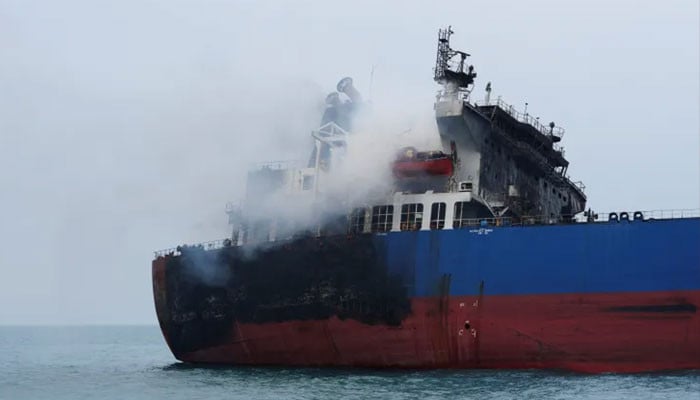
The escalating conflict between the US, Israel, and Iran has resulted in a surge in oil prices, putting a significant strain on the US economy. If the conflict prolongs, the US may face inflation, economic stagnation, and widespread business closures. US President Donald Trump claimed earlier this week that the US had won the war within hours, but the situation remains uncertain as the Strait of Hormuz remains blocked, and Iran continues to attack ships.
The Strait of Hormuz is a critical waterway, accounting for nearly 20% of the world’s oil exports, and its blockage is considered a significant threat to the global economy. Experts warn that if tensions persist, oil prices could reach $200 per barrel. Ron Hiberd, CEO of a Texas-based company, confirmed this assessment.
Petrol prices have already started to rise in the US, with the average price reaching $3.59 per gallon by Wednesday, a 65-cent increase from February. According to Patrick de Haan, a fuel price analyst, the price of petrol could increase by 25-40 cents every week if the conflict continues.
A report suggests that if oil prices remain around $140 per barrel for an extended period, the US economy could be at risk of recession. Sem Ori, an energy policy expert at the University of Chicago, pointed out that whenever oil prices have reached 4-5% of the US GDP, it has led to economic crises.
The US Central Command has acknowledged that they are aware of the potential loss of an aircraft refueling plane. The conflict has also affected global trade, with ports experiencing increased pressure. If the situation persists for a month, there could be delays in the delivery of essential goods, leading to price increases.
The conflict has also affected the supply of helium gas, which is crucial for the semiconductor industry, agriculture, and other industries. If the conflict prolongs, it could have far-reaching consequences for the global economy and US trade.
The Saudi Defense Ministry announced that it had destroyed 56 drones and one drone that attempted to target Riyadh’s diplomatic area. The US Secretary of Defense stated that the US was conducting over 1,000 daily attacks on Iran. President Trump said that the situation in the Strait of Hormuz was improving and that commercial ships should resume operations to avoid another conflict in five years.
Israeli fighter jets bombed a university in Lebanon, targeting the science faculty’s courtyard. The US Senate confirmed that four crew members of an American Air Force plane that crashed in Iraq were killed. Israel claimed to have launched over 200 attacks on Iran in the past 24 hours.
The conflict has marked a significant shift in the Middle East, where traditional weapons are being replaced by electronic warfare, satellite information, and radar signals. The Iranian Revolutionary Guard Corps has stated that the world will witness a different Jerusalem Day.
US Treasury Secretary Steven Mnuchin announced that the US would lift sanctions on Russian oil by April 11. Iranian Supreme National Security Council Secretary Ali Larijani warned that if the US attacks Iran’s energy infrastructure, the entire Middle East would face severe consequences.
The Iranian Revolutionary Guard Corps has claimed that the US aircraft carrier USS Abraham Lincoln has been targeted by missiles, causing significant damage. Experts believe that this is an attempt to deceive Israel’s advanced air defense system.
A report suggests that the construction permit for a project in occupied Jerusalem has been almost impossible to obtain.
