President Kennedy’s Name, Trump’s Plaque, and the Trial of the American Tradition !
By Raja Zahid Akhtar Khanzada
If history has an aversion, it is to artificial plaques. History does not speak through nameplates fixed to doors. It speaks through decisions. It does not read names etched into walls; it remembers the moral character of nations. Yet when power convinces itself that inscribing a name is enough to manufacture a legacy, the result is precisely what the United States is witnessing today a moment that has startled even the American public.
According to the White House, the board of the Kennedy Center has voted to rename the performing arts institution the Trump–Kennedy Center. White House Press Secretary Karoline Leavitt announced the decision on social media, stating that the board voted unanimously in recognition of what she described as President Trump’s “incredible work over the past year in saving the building.” She went so far as to congratulate the late President John F. Kennedy as well, writing that this would be “a truly great team for the future” and that the building would “undoubtedly reach new levels of success and grandeur.”
Yet it was evident from the outset that this decision would provoke controversy particularly in Washington, where the Kennedy Center has stood for decades not merely as a venue, but as a national symbol built in memory of a fallen president.
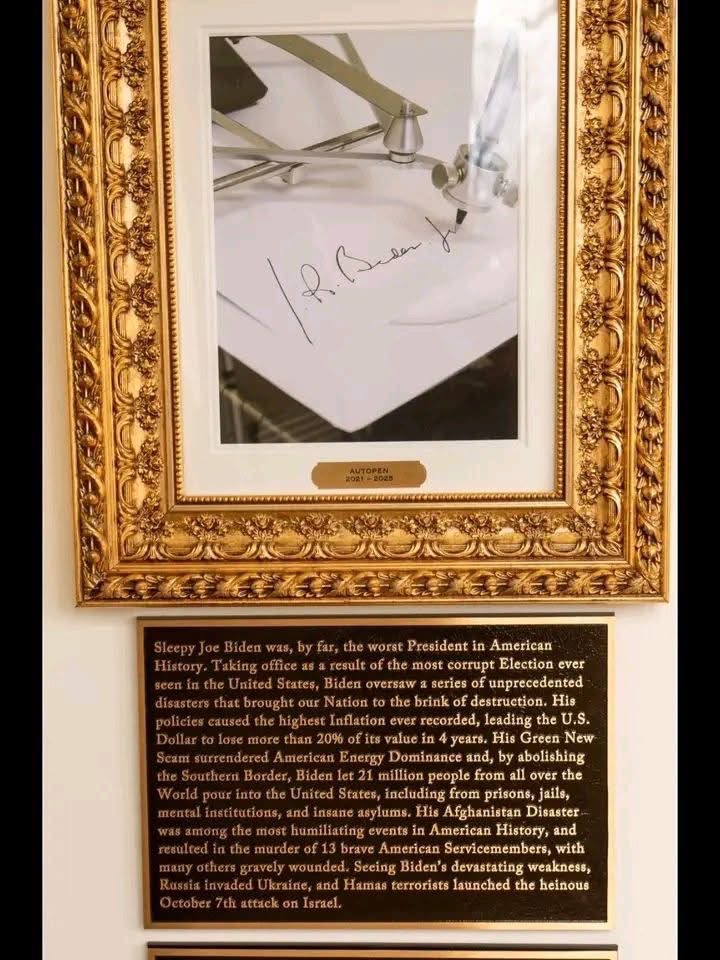
In American political history, presidents left their names behind; they did not seize buildings. George Washington did not name the capital after himself. Abraham Lincoln ended slavery but did not commission a “Lincoln Tower.” Franklin Roosevelt built institutions, but he did not engrave his name upon them. The American tradition of historical endurance has always rested on principles, decisions, and sacrifice not on the manipulation of names or the occupation of memorials.
That is precisely why President Donald Trump’s attempt to attach his own name to the John F. Kennedy Center is no longer a routine administrative matter. It has become a test of American history, institutional tradition, and moral politics. The question is not whether President Trump authorized funding or oversaw repairs. The question is whether a sitting president has the moral or legal authority to append his name to the memorial of an assassinated predecessor, especially through a process in which dissenting voices were silenced.
The Kennedy Center’s board announced the renaming as a unanimous decision, presenting it as a triumph. But almost immediately, another face of American democracy emerged. Representative Joyce Beatty, a Democrat from Ohio and an ex officio board member, publicly disputed the claim of unanimity. She stated that she attempted to speak during the meeting but was muted on the call and that this enforced silence was then presented as consensus.
This was not merely administrative discourtesy. It was a decision built on flawed logic. The Kennedy Center is not a private building. It is a national memorial established by an act of Congress in 1964 and explicitly designated as a “living memorial” to President John F. Kennedy. When the law defines a building as a memorial, attaching the name of a living politician to it amounts to a personal appropriation of the state’s collective memory.
For this reason, the reaction from the Kennedy family and members of Congress has not been emotional but principled. Their argument is straightforward. If the memorial was created by law, its renaming must also occur through law not through a board vote, a conference call, or a social media announcement.
At its core, this is not a dispute over a name. It is a question of tradition.
In the United States, institutions have historically been placed above personalities. This stands in contrast to political cultures in Pakistan and South Asia, where changes in government often bring changes in street names, airports, universities, and national projects. In South Asia, even large-scale national initiatives gradually ceased to symbolize performance and instead became exercises in plaque politics. Whether it is CPEC, the Benazir Airport, a motorway, a port, or a mega-project, the pattern is familiar: the sacrifice belongs to one, the ribbon is cut by another, and the credit is claimed by a third.
That is why this decision has landed in America like a jolt. Attaching the name of a sitting president to the memorial of a slain president represents a serious symbolic rupture.
The arguments against this decision are neither vague nor sentimental. They are clear and uncompromising.
First, it conflicts with the law and the limits of authority. The 1964 statute explicitly defines the Kennedy Center as a national memorial to John F. Kennedy.
Second, it undermines democratic ethics. Muting dissent and branding the result as unanimity mirrors practices common in weaker democracies.
Third, it damages institutional sanctity. Turning a national cultural symbol into a branding exercise for a living president transforms it from a neutral institution into a political trophy.
Fourth, it establishes a dangerous precedent. If today it is the Kennedy Center, tomorrow it may be the Lincoln Memorial, and the day after, the Jefferson Memorial.
Fifth, it is not a reflection of performance but of credit politics. The $257 million allocated for repairs came from public funds. Public money does not convert into private entitlement, nor does it justify engraving a personal name upon a national institution.
Another dimension of this episode deserves attention. Had there been a shortcut to historical immortality within the Republican tradition, President Trump would likely have taken it. But Republican history is anchored by figures such as Eisenhower, Lincoln, and Reagan pillars so firmly embedded that little room remains for manufactured legacy. And so, President Trump knocked on a different door. A Democratic door. The door of John F. Kennedy.
It is an irony not lost on observers that Trump, whose politics have long stood in opposition to Kennedy’s ideals, now seeks proximity to Kennedy’s symbolic power, a power amplified not by ambition, but by death.
This is not merely an addition of names. It is a symbolic occupation. The attempt of a living figure to cast his shadow over a martyred one.
The same psychology is visible in President Trump’s pursuit of the Nobel Peace Prize. He does not halt wars, but he seeks plaques for them. Somewhere in the Middle East, someone else bears the cost. Somewhere in South Asia, someone else absorbs the pressure. And before the camera stands Trump, wearing the language of peace.
The inevitable question follows. When Trump is no longer president, will any of this endure. History’s temperament suggests otherwise. Decisions unsupported by law tend to fracture with time. The failed attempt to rebrand the Department of Defense as the “Department of War,” undertaken without congressional consent, offers a revealing precedent.
Pakistani readers understand this psychology well. Names written by power disappear with power. Muhammad Ali Jinnah, Zulfikar Ali Bhutto, Nelson Mandela did not depend on buildings for remembrance.
Perhaps this is what most unsettles Americans today. They are watching a system they once celebrated slowly resemble South Asian politics where institutions weaken while personalities grow larger.
And finally, there is a bitter parallel that cannot be ignored. Years ago, a common refrain in Pakistan held that President Asif Ali Zardari wished to live on in history. In South Asia, however, the desire for historical permanence often ceases to be service and becomes strategy. And when strategy slides into manipulation, the outcome resembles precisely what is now unfolding in the United States.
There is only one rule for surviving history.
Those who speak truth for their nation are recorded.
Those who sacrifice are remembered.
Those who ask only for plaques become noise, loud for a few years, then forgotten.
The plaque at the Kennedy Center may change.
History’s plaque will not.
Because history preserves only those names that are larger than their shadow and greater than their ambition.